Project Overview
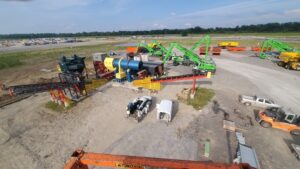
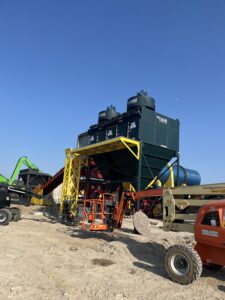
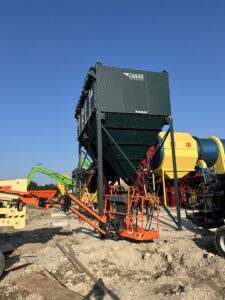
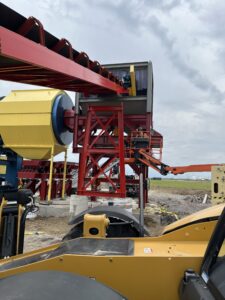
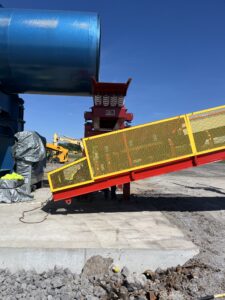
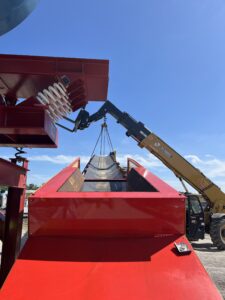
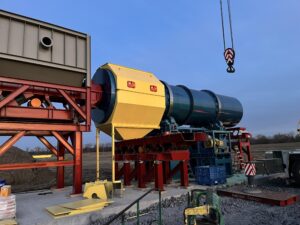
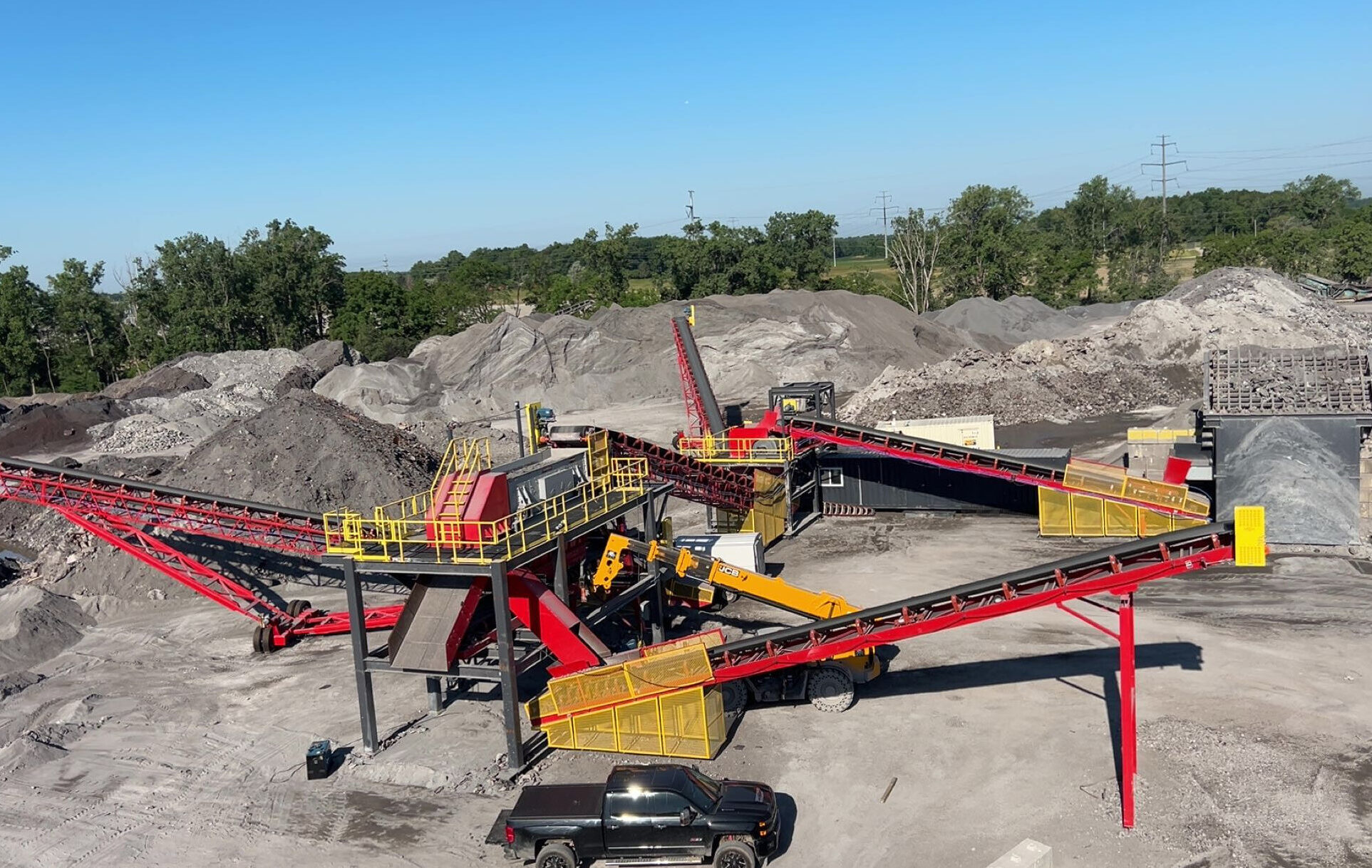
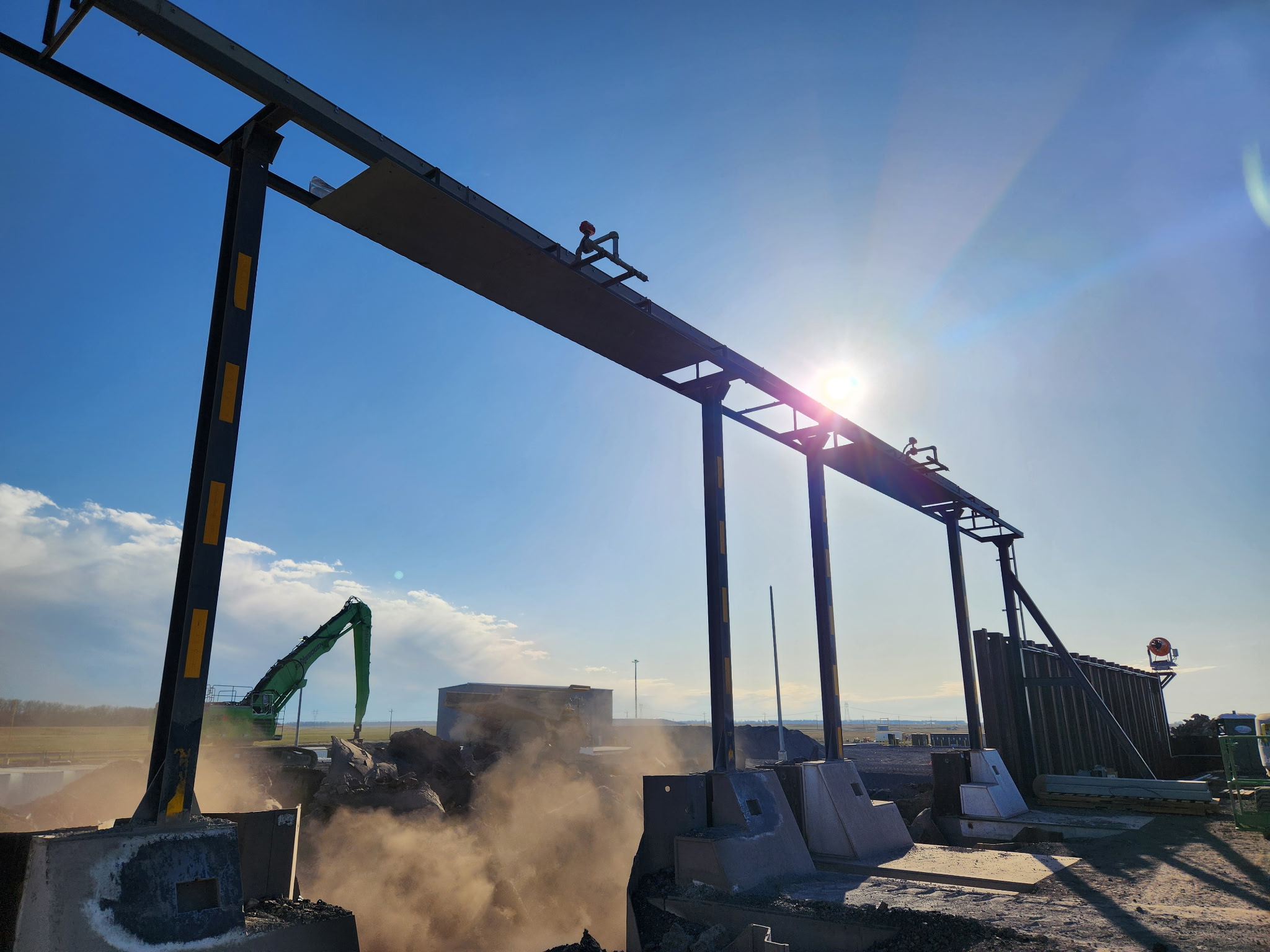
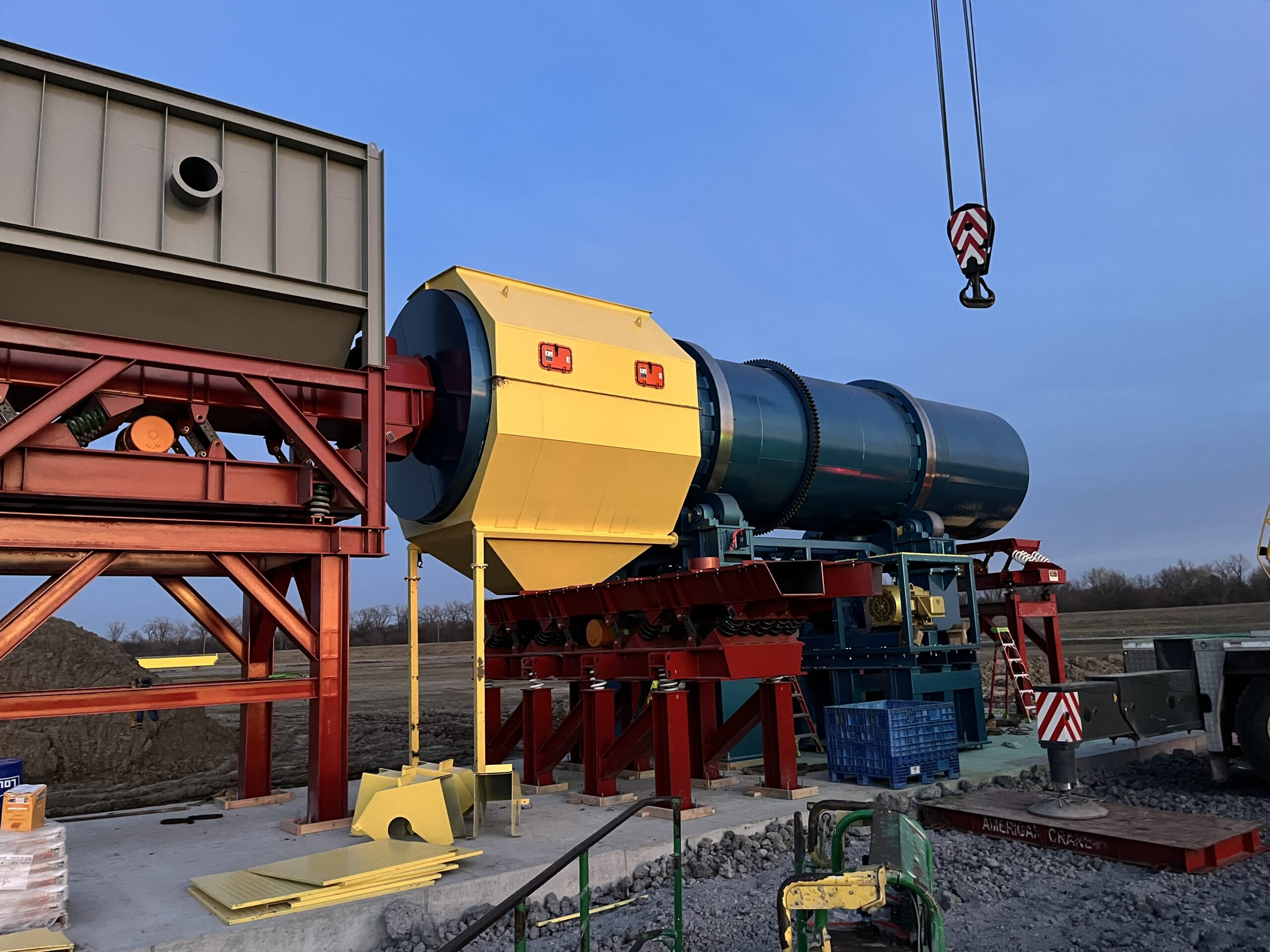
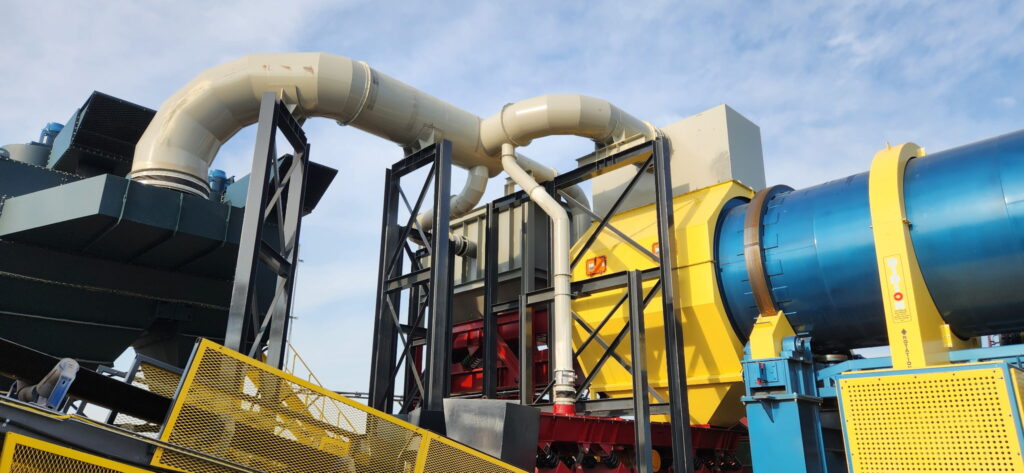
This project consisted of the fabrication and installation of a complete debris plant, enhanced with a Didion system addition to support advanced material handling and separation requirements.
The work was executed as a turnkey installation, including:
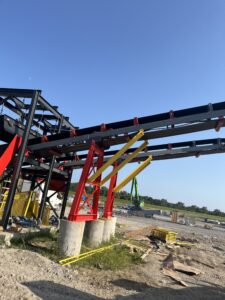
- Custom structural steel fabrication
- Conveyor systems
- Magnetic separation equipment
- Screening and stacking systems
- Controls, automation, and data integration
- Mechanical and electrical installation
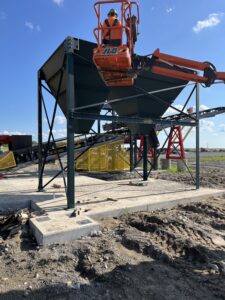
The plant was designed to be erected on engineered concrete foundations, with foundation design coordinated after completion of equipment engineering to ensure optimal performance and cost efficiency. Electrical power supply to the MCC was excluded from this scope and quoted separately based on site conditions.
Feeder Frame and Material Infeed System
Material enters the system through a custom-fabricated feeder frame and feed chute assembly, engineered to manage heavy debris loads while protecting downstream equipment.
Key features include:
- Heavy-duty feeder support frame
- Feed chute fabricated from ½” mild steel
- Bolt-in ½” Tricon liners for extended wear life
- ½” push plates on both long sides of the feeder frame to support ramp building and oversize loadout
This robust infeed system ensures consistent material flow and minimizes wear in high-impact zones.
Grizzly Hopper Assembly
A custom grizzly hopper and bar grizzly assembly was fabricated and installed to remove oversize material prior to conveying.
- Grizzly bar spacing configured at 12″ × 12″ openings
- Design duplicated proven field modifications previously implemented at GTMS
- Integrated structural support for long-term durability
This configuration improves plant uptime by preventing oversized material from entering downstream conveyors and separation equipment.
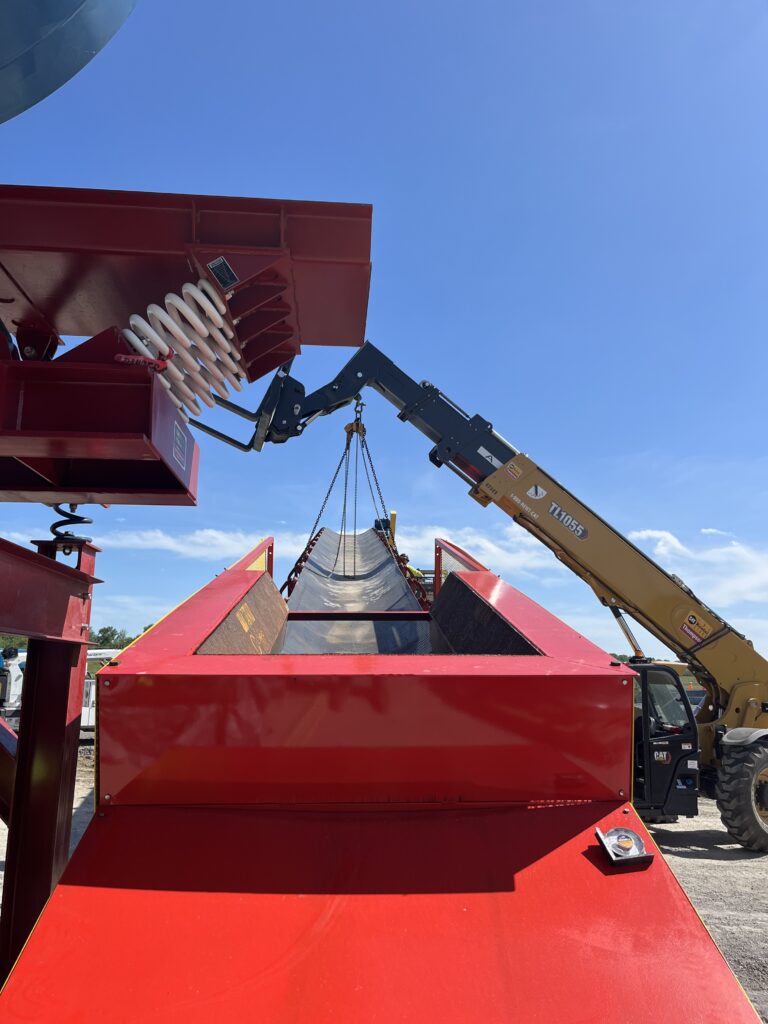
Primary Feed Conveyor (48″ × 60′)
Material is transferred from the grizzly hopper to the processing line via a 48″ × 60′ channel conveyor, built to handle continuous heavy-duty operation.
Typical specifications include:
- 20 HP Dodge TAII gearbox
- Superior pulleys and idlers with upgraded titanium seals
- 20-degree troughing
- 48″ impact bed at loading zone
- 330 US Flex belting
- Tricon-lined headbox
The conveyor was designed for durability, belt tracking stability, and ease of maintenance.
Drum Magnet Structure and Ferrous Separation
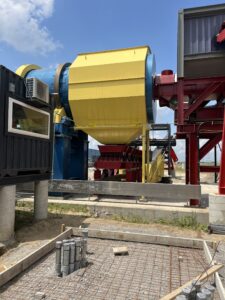
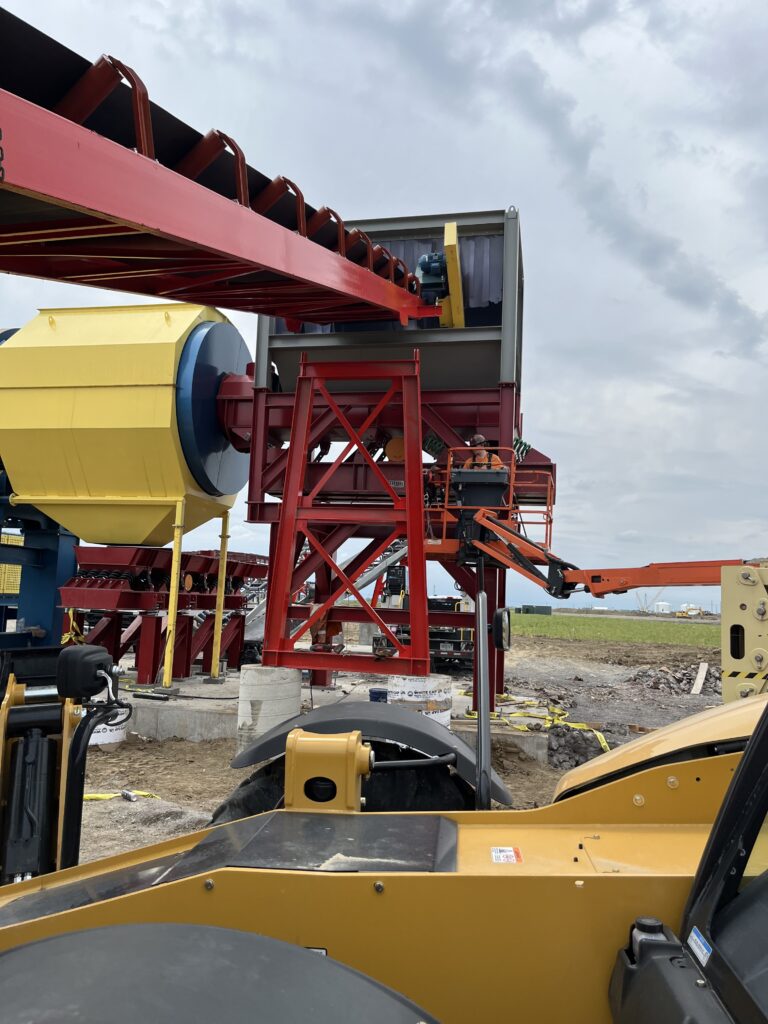
To recover magnetized material early in the process, Xtreme Services fabricated and installed a drum magnet support structure engineered to support both the magnet and associated discharge equipment.
Scope included:
- Structural frame supporting the drum magnet
- Two Syntron F-480 feeders (slag and metallic streams)
- Under-drum chutes fabricated from ¼” mild steel
- Bolt-in ½” AR liners on vertical surfaces
- Bolt-in ½” Tricon liners on angled surfaces
- 360-degree catwalk and stair access for safe maintenance
This separation stage allows efficient recovery of ferrous material while maintaining controlled material flow.
Slag and Ferrous Conveyor Systems
Separated material is routed through dedicated slag and ferrous conveyor systems designed for their specific duty cycles.
48″ × 50′ Slag Conveyor
- Channel frame construction
- 20 HP Dodge TAII gearbox
- 18″ stainless steel head pulley
- Superior pulleys and idlers with upgraded seals
- 35-degree troughing
- Impact bed
- 330 US Flex belting
48″ × 50′ Ferrous Conveyor
- Channel frame construction
- 20 HP Dodge TAII gearbox
- Superior pulleys and idlers with upgraded seals
- 35-degree troughing
- Impact bed
- 330 US Flex belting
Both conveyors were fabricated to reduce spillage, withstand abrasion, and support continuous operation.
Over-Band and Douglas Magnet Systems
Additional magnetic separation was achieved using inline over-band and Douglas magnet systems, each supported by custom-fabricated steel structures.
Over-Band Magnet Structure
- Inline over-band magnet mounted on skid frame
- One metallic chute
- One slag chute
- Metallic pile plate
- Chutes fabricated with ¼” steel shells
- Bolt-in ½” AR liners on vertical walls
- Bolt-in ½” Tricon liners on angled surfaces
Single and Dual Douglas Magnet Structures
- Across-line magnet support structures
- Self-dumping hoppers (2-yard capacity)
- Dual-magnet configuration with independent discharge paths
These systems further refine material separation and improve overall recovery efficiency.
Screening and Classification System
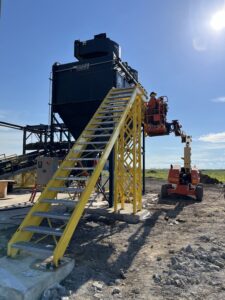
Material classification is handled by a 5′ × 16′ Superior horizontal screen, supported by a custom structural steel frame fabricated by Xtreme Services.
Scope included:
- Under-screen chute with AR and Tricon liners
- Overs roll-off chute above catwalk
- Overs discharge chute below catwalk
- Full 360-degree catwalk and stair access
The structure was designed to support dynamic screening loads while maintaining safe access for operators and maintenance personnel.

Didion Surge Hopper and Conveyor Integration
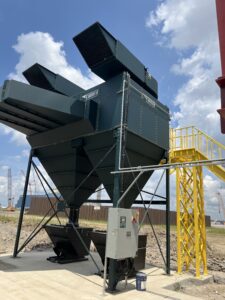
A key component of this project was the integration of a Didion surge hopper system, allowing controlled material flow into downstream processing.
Features include:
- Surge hopper measuring 16′ L × 8′ W, tapering to a 3′ × 2′ discharge opening
- 1′ top lip on non-feed sides to limit spillage
- Hopper fabricated from ¼” steel with bolt-in ½” Tricon liners
- Structural support designed to carry both the surge hopper and associated Syntron feeder supplied by Levy
Material exiting the surge hopper is conveyed via a 36″ × 60′ under-surge conveyor, followed by multiple fixed stacker conveyors equipped with belt scales for production tracking.

Controls, Automation, and Data Systems
The debris plant and Didion addition are operated through a PLC-based control system with touchscreen HMI interface.
The controls scope included:
- VFD-controlled motors
- Belt speed switches on all conveyors
- Integration with Syntron feeders and weigh belt systems
- Supplemental control panels with remote I/O
- Communication with third-party equipment via Modbus
An optional cloud-based data package provides live and historical performance data, including:
- Tons produced
- Motor amp trends
- Sensor and fault history
This system enables data-driven decision-making without allowing remote operation of equipment.
Control Room Connex and Supporting Systems
Two modified 40′ Connex enclosures were provided to house controls and auxiliary equipment:
- Debris Plant Controls Connex
- Didion Plant Controls Connex
Each enclosure included:
- Interior partitions
- Insulation, interior finish, and paint
- Mini-split HVAC systems
- LED lighting
- Man doors with stair access
- Operator counters and viewing windows
- Exterior paint matched to plant scheme
These enclosures provide a protected, climate-controlled environment for plant operations.
Mechanical and Electrical Installation
Xtreme Services provided full mechanical and electrical installation, including:
- Cranes, telehandlers, manlifts, and tooling
- Field welding and final fit-up
- Rapid mobilization
- Onsite startup and debug support
Electrical scope included cable tray installation, armored cabling to motors, and multi-location startup support, ensuring the system was commissioned efficiently and safely.
A Fully Integrated Debris and Didion Processing Solution
This project represents a complete debris plant solution with an integrated Didion addition, combining heavy-duty fabrication, advanced separation technology, and centralized automation into a single, cohesive system.
By delivering the project as a turnkey installation, Xtreme Services provided Levy with a debris processing facility engineered for performance, reliability, and long-term operational success.