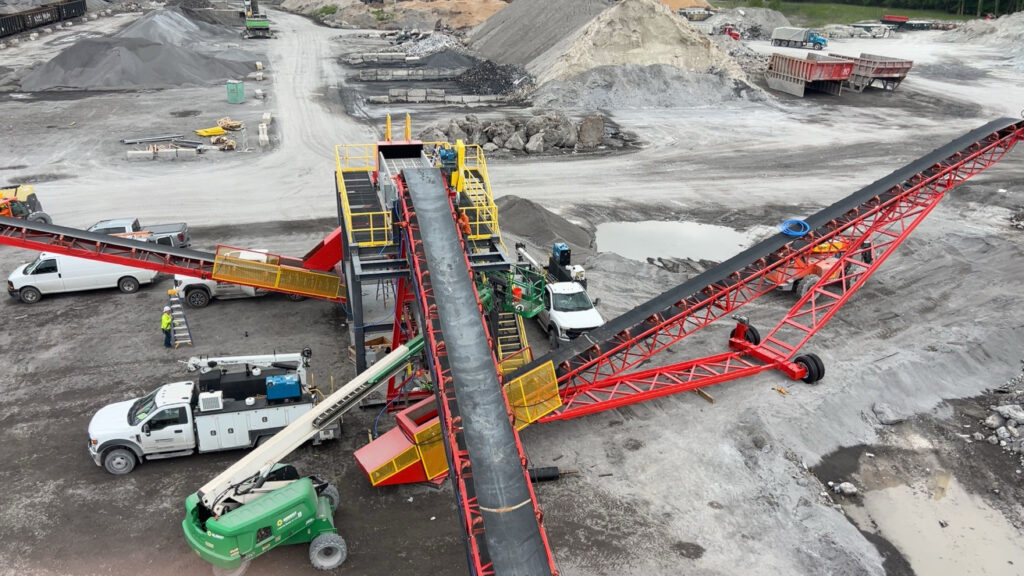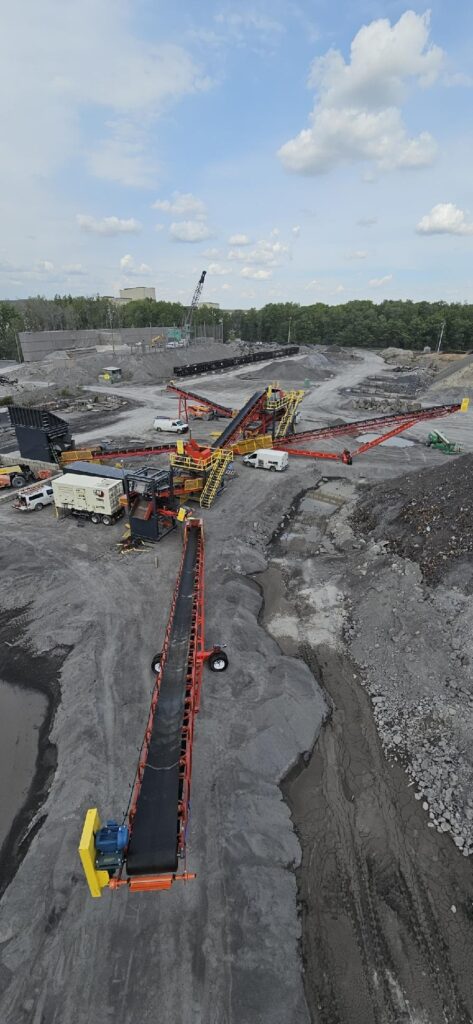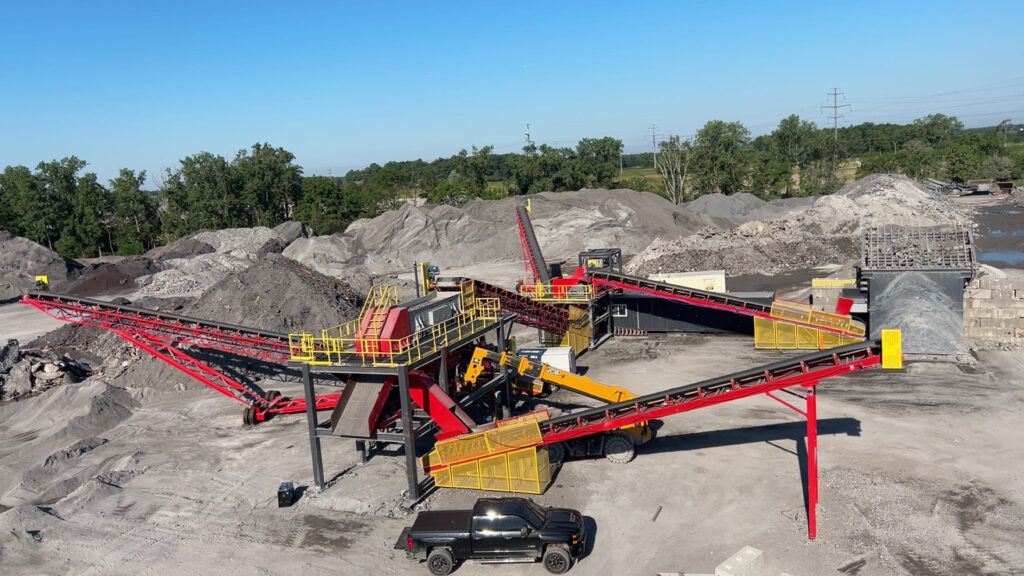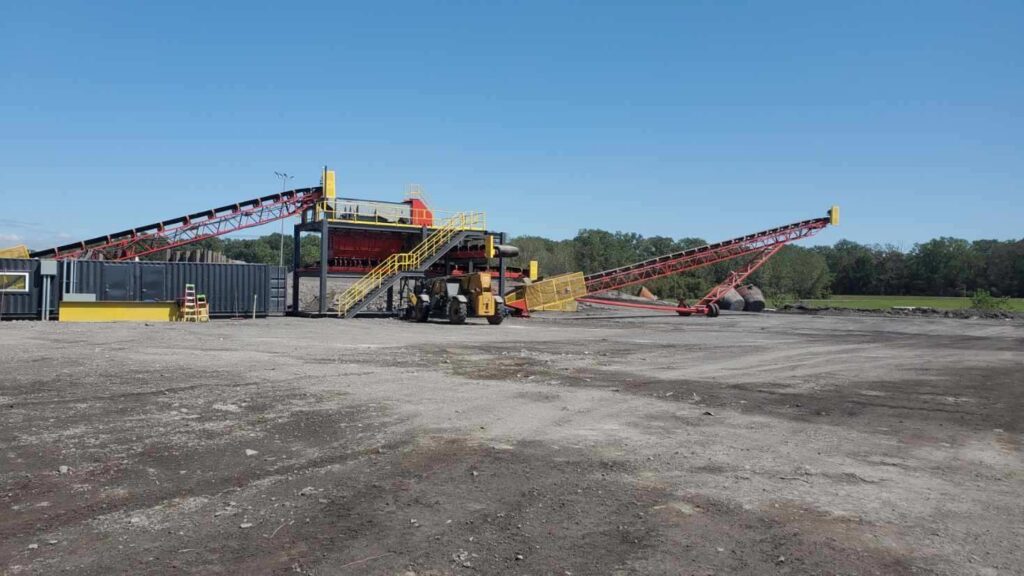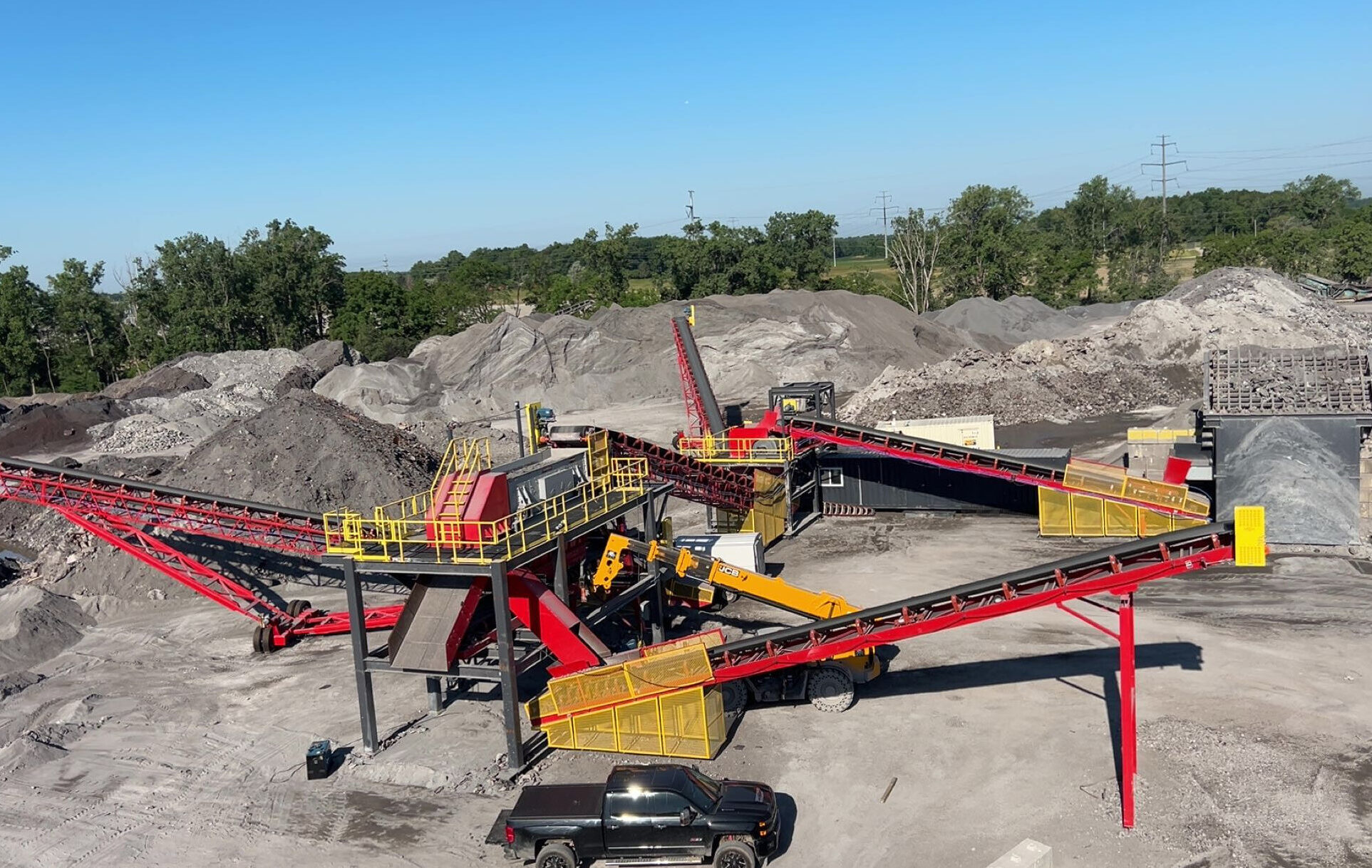
Modern debris processing facilities demand more than basic conveyors and steel structures. They require engineered systems that can reliably separate valuable magnetized material from non-magnetized debris, operate continuously in harsh environments, and provide operators with visibility into performance, throughput, and maintenance needs.
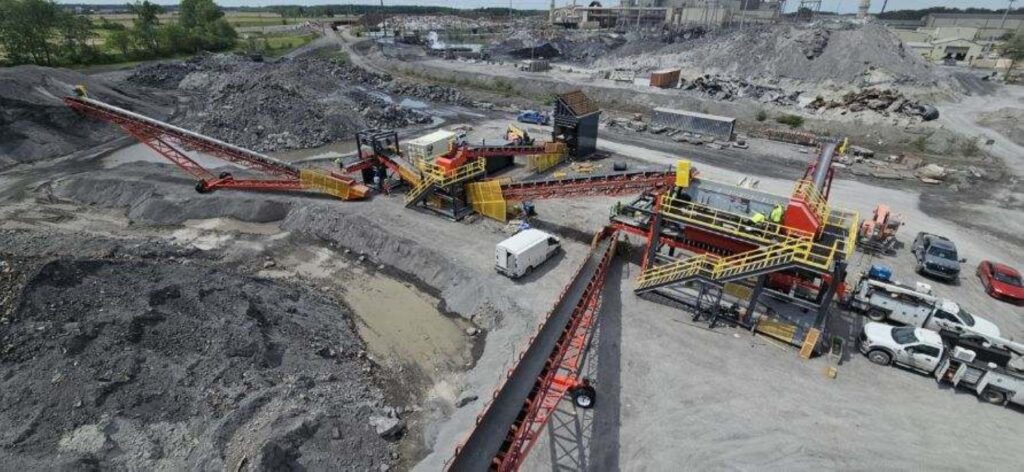
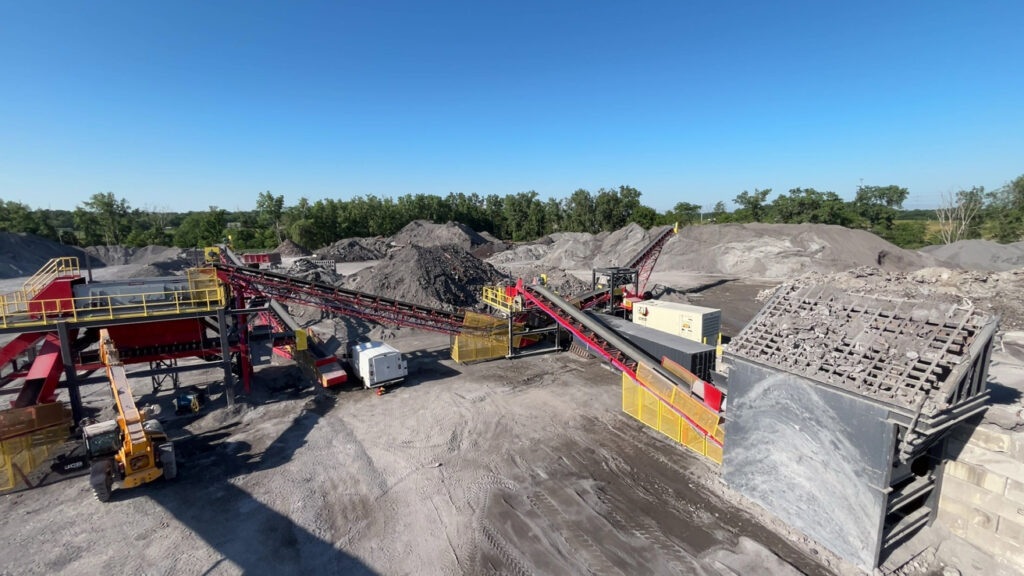
At Xtreme Services, we fabricate and install turnkey debris plants designed for high-volume material handling, advanced magnetic separation, and long-term durability. Across multiple installations, our debris plant systems have proven to be a cutting-edge solution for material recovery operations that demand uptime, safety, and efficiency.
This page outlines the typical configuration, fabrication approach, and operational advantages of our debris plant systems.
Turnkey Debris Plant Systems Built for Real-World Conditions
Each debris plant is delivered as a turnkey solution, meaning a single contractor is responsible for:
- System design coordination
- Structural steel fabrication
- Conveyor fabrication and integration
- Magnetic separation structures
- Controls, automation, and data systems
- Mechanical and electrical installation
- On-site startup and debugging
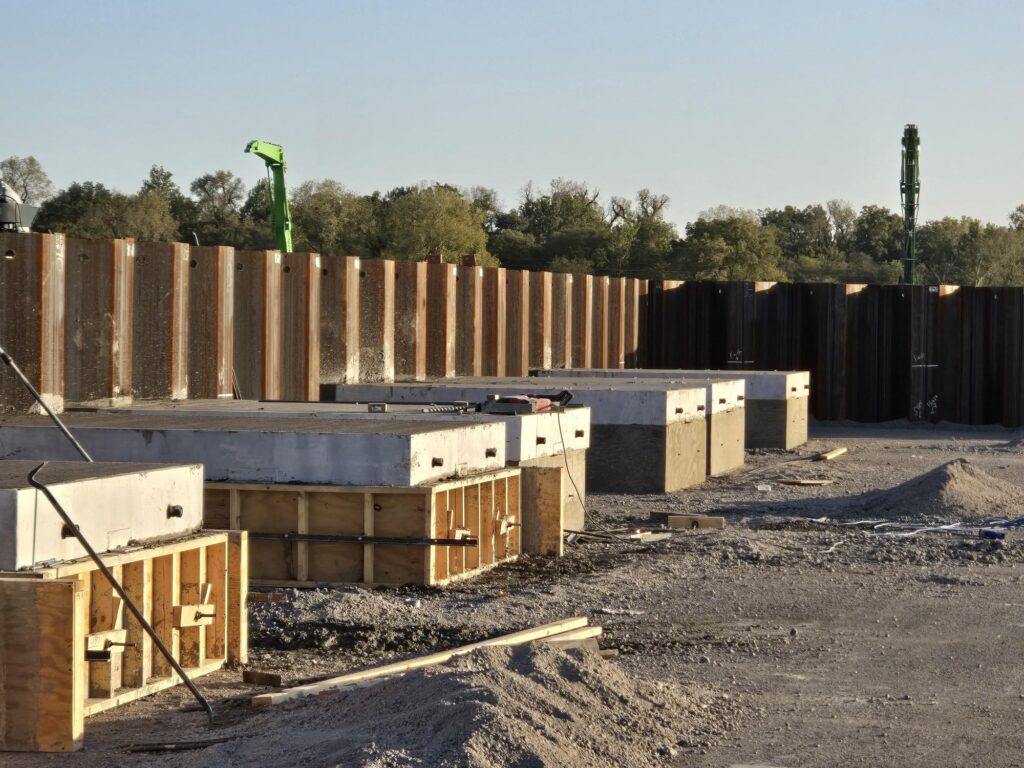
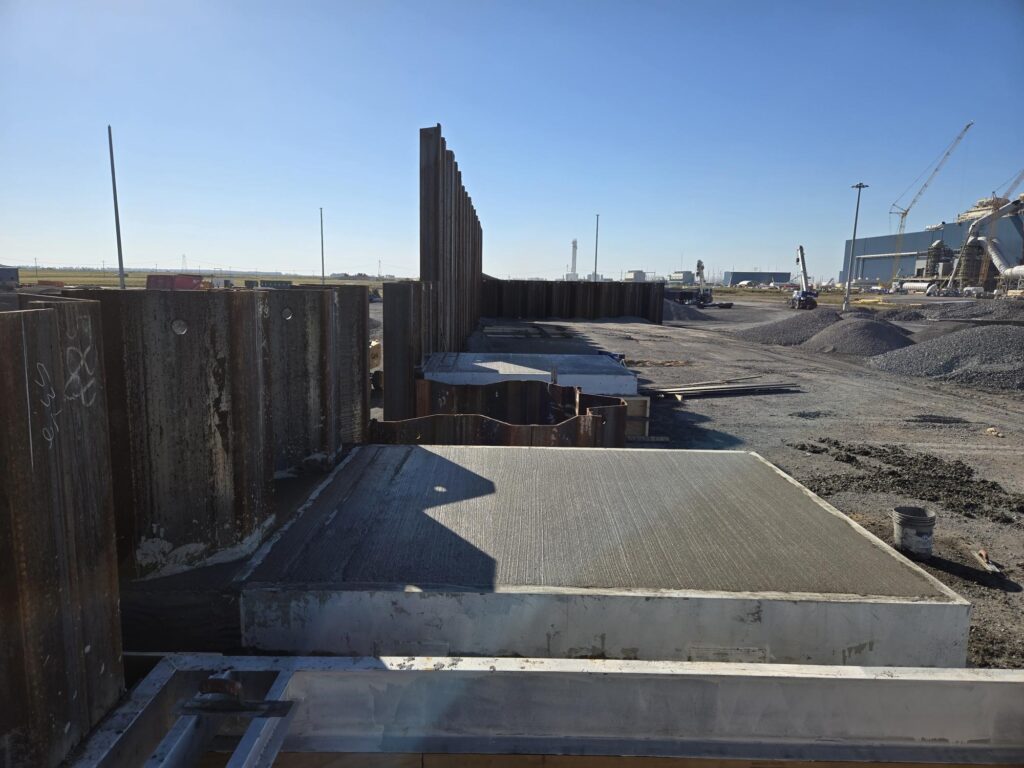
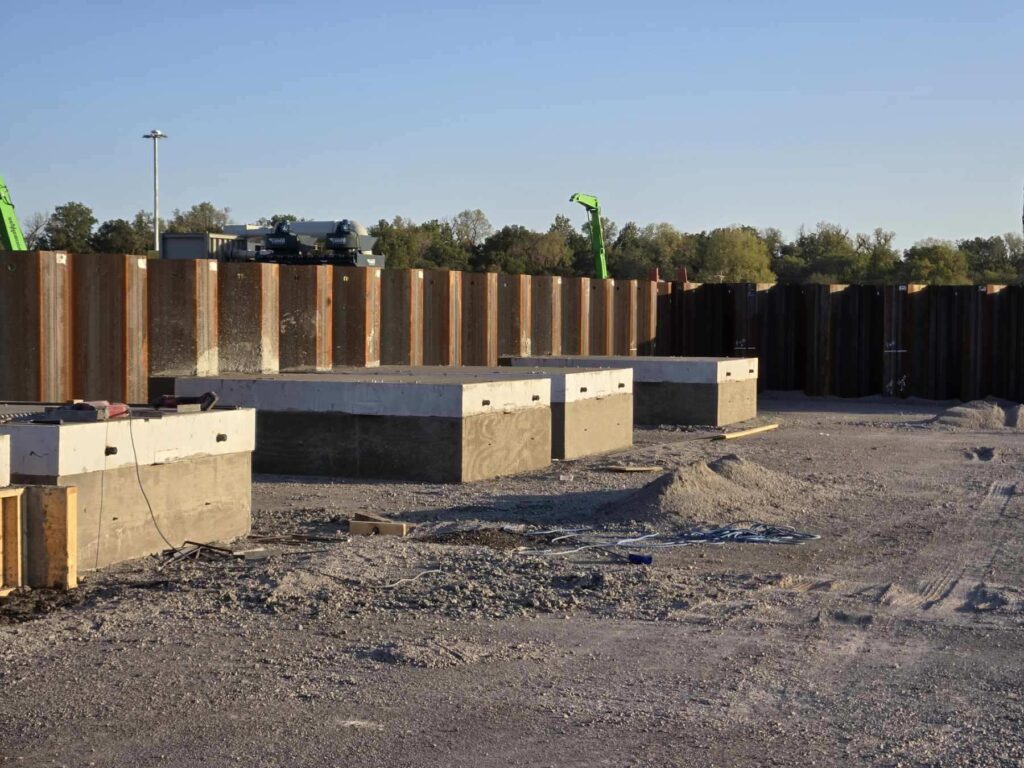
The plants are designed to be erected on engineered concrete foundations provided by others, allowing the final foundation design to be optimized once engineering is complete. Electrical power supply to the main motor control center (MCC) is quoted on a per-site basis, ensuring each installation is properly matched to local power conditions.
While individual plants may vary slightly based on site requirements, material characteristics, or layout constraints, the systems share a modular, repeatable design philosophy that allows for consistent performance across multiple installations.

Advanced Magnetic Separation: The Core of the Debris Plant
At the heart of the debris plant is a multi-stage magnetic separation system designed to efficiently recover ferrous material while routing non-magnetized debris through independent material paths.
Using a combination of:
- Drum magnets
- Over-band magnets
- Across-line magnetic separators
- Controlled discharge conveyors and chutes
the system mechanically separates magnetized material from slag and other non-ferrous debris. This approach allows operators to recover valuable steel, reduce waste, and improve downstream material handling efficiency.
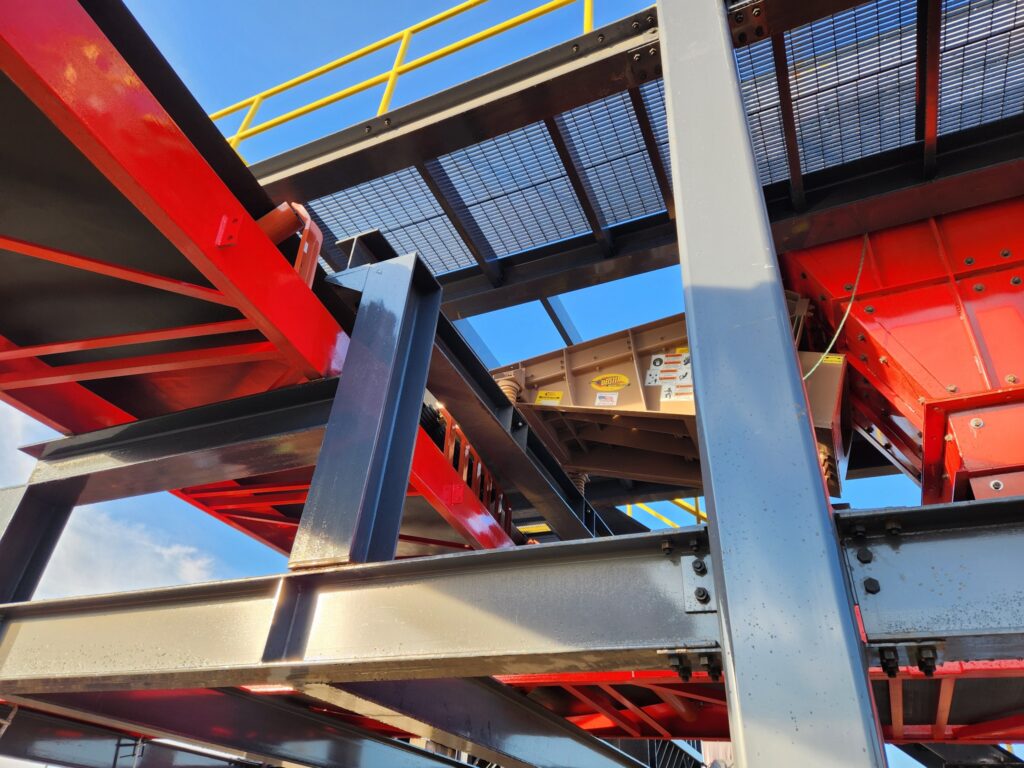
Each separation stage is supported by heavy-duty fabricated structures, wear-lined chutes, and maintenance-friendly access platforms to ensure long service life and safe operation.
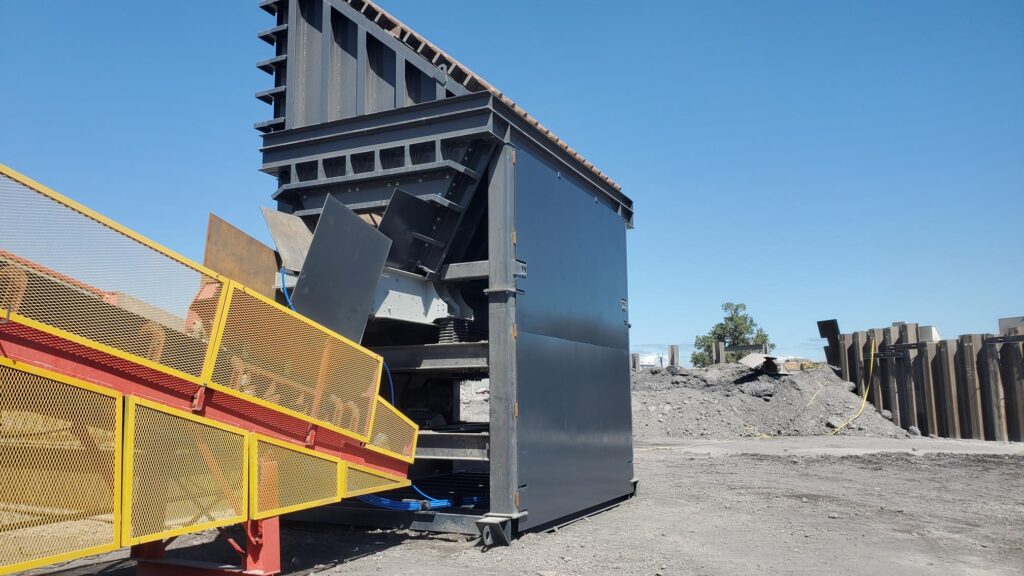
Feeder Frame and Grizzly Hopper Assembly
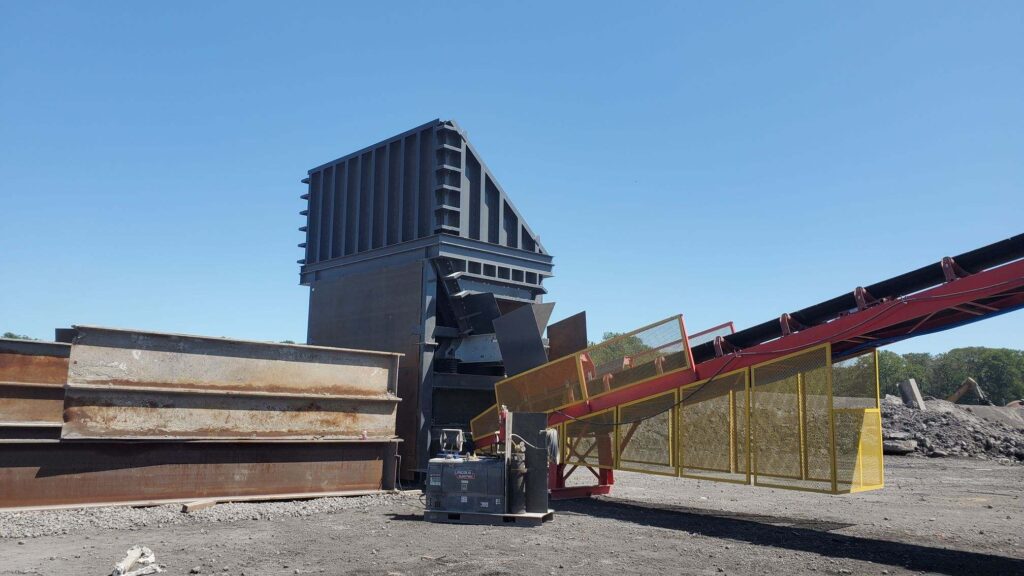
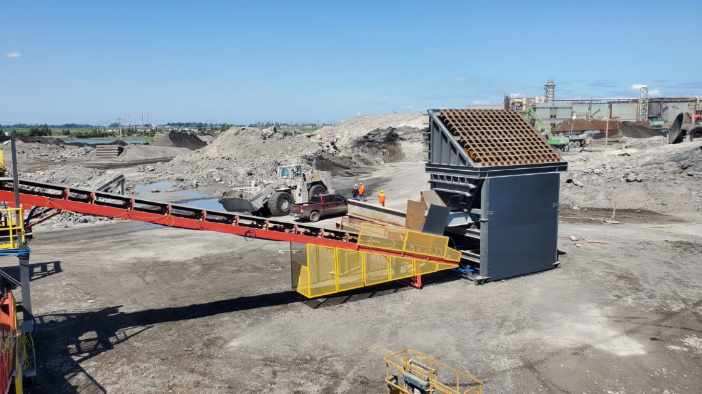
Material enters the plant through a custom-fabricated feeder frame and grizzly hopper system designed to handle heavy, abrasive debris.
Key features include:
- Heavy-duty feeder support frame
- Feed chute fabricated from ½” mild steel
- Bolt-in ½” Tricon liners for extended wear life
- ½” push plates on both long sides of the feeder frame for ramp building and oversize loadout
- Grizzly hopper with 12″ x 12″ bar openings, duplicating proven field-tested grizzly modifications
This assembly is designed to manage large, irregular material while protecting downstream conveyors from excessive impact and wear.
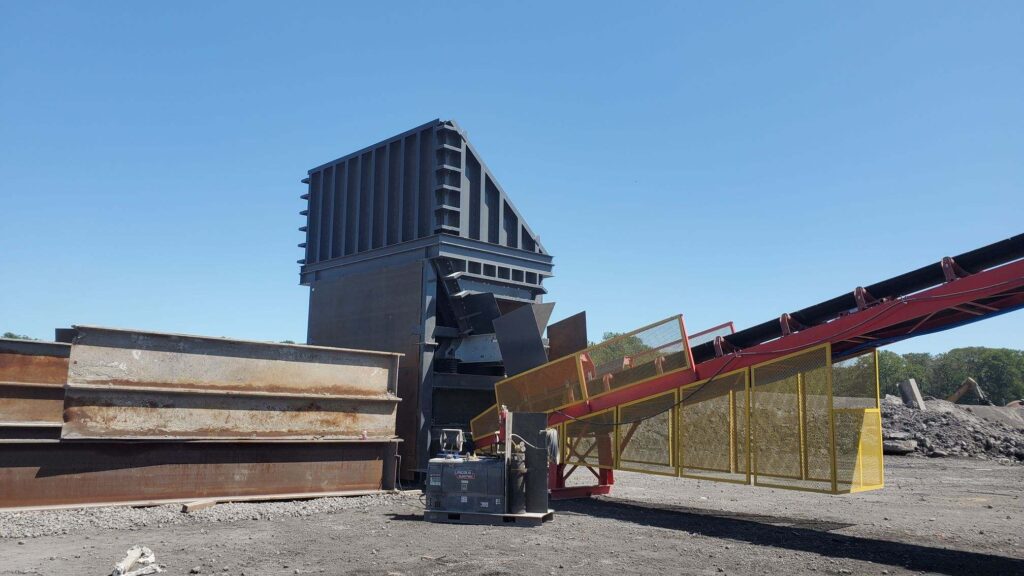
Primary Feed Conveyor System (48″ x 60′)
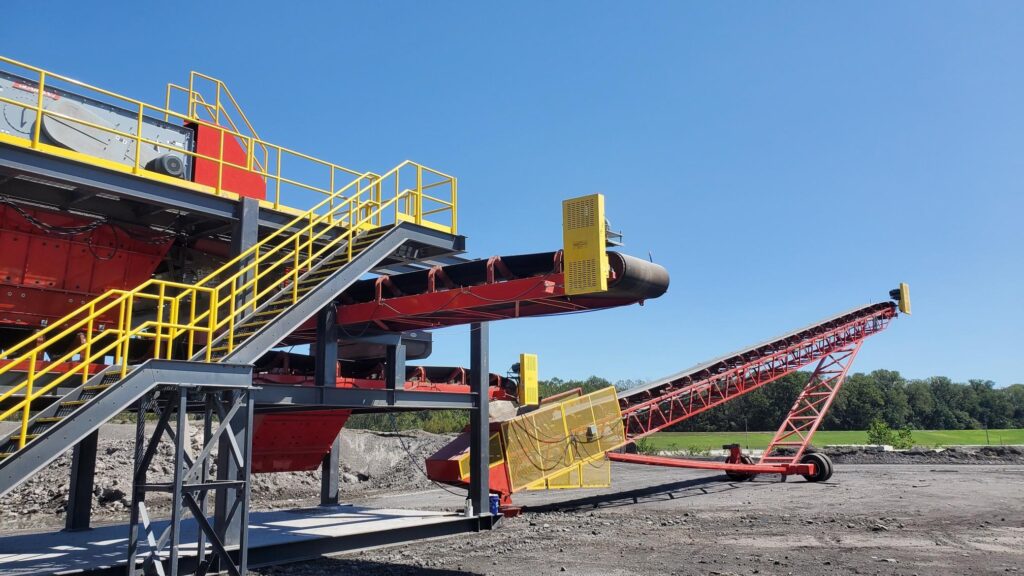
The primary feed conveyor moves material from the grizzly system into the separation and screening process. This conveyor is fabricated as a channel-frame conveyor and built to withstand continuous shock loading.
Typical specifications include:
- 48″ wide belt, 60′ length
- 20 HP Dodge TAII gearbox
- Superior pulleys and idlers with upgraded titanium seals
- 20-degree troughing
- 48″ impact bed at loading zones
- 330 US Flex belting
- Tricon-lined headbox for abrasion resistance
Every conveyor is designed with serviceability, belt tracking, and longevity in mind.
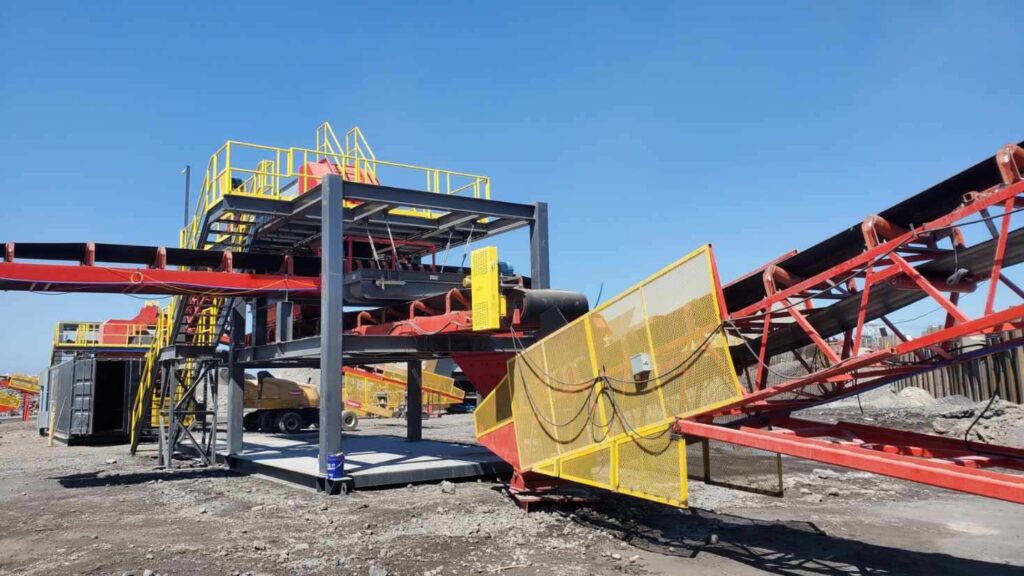
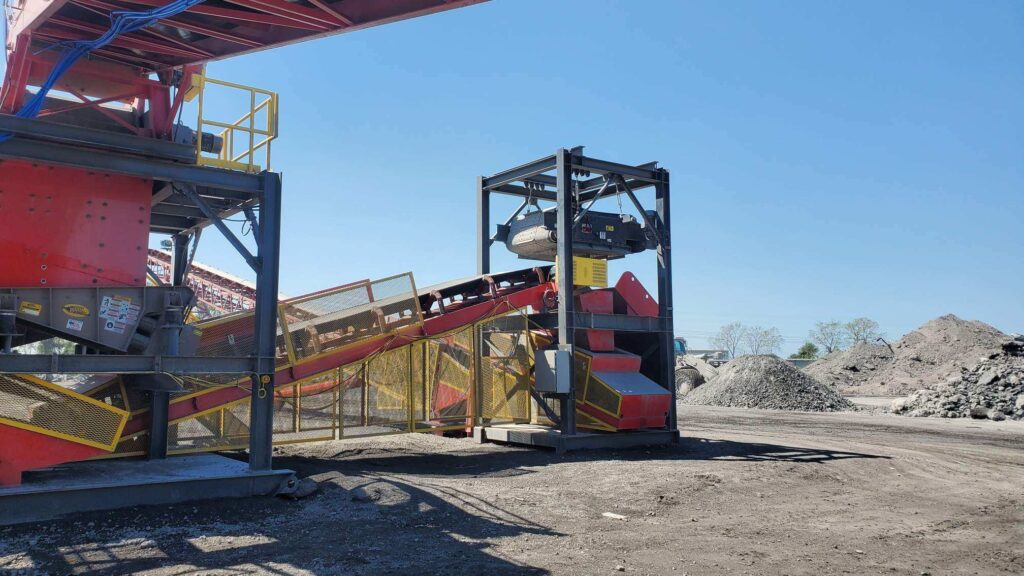
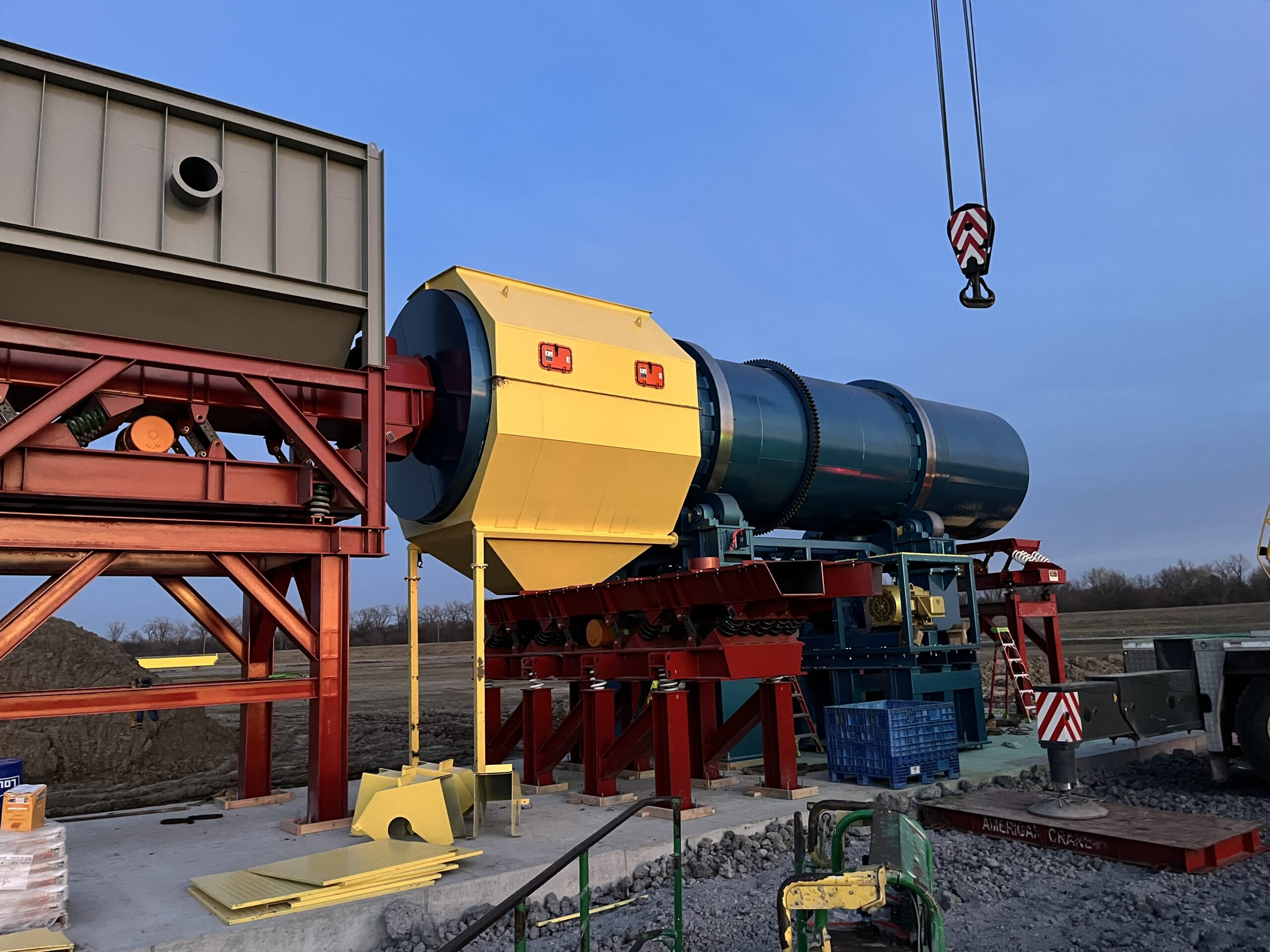
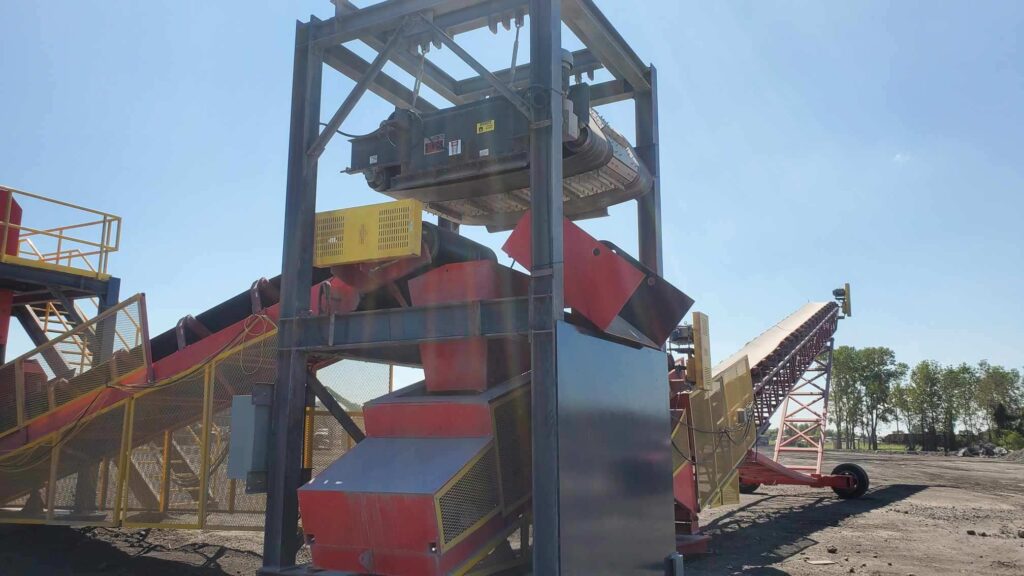
Drum Magnet Structure and Ferrous Separation
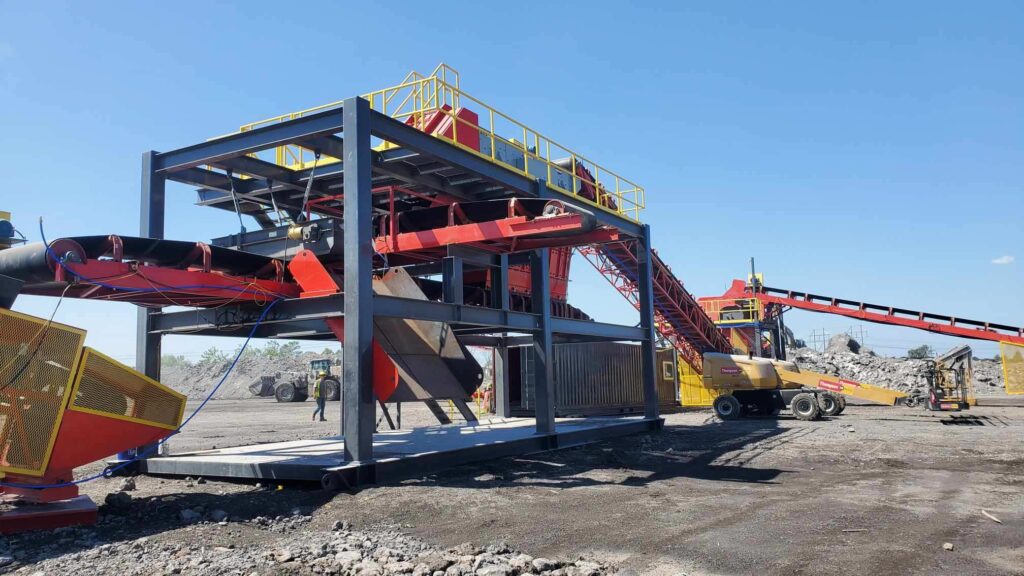
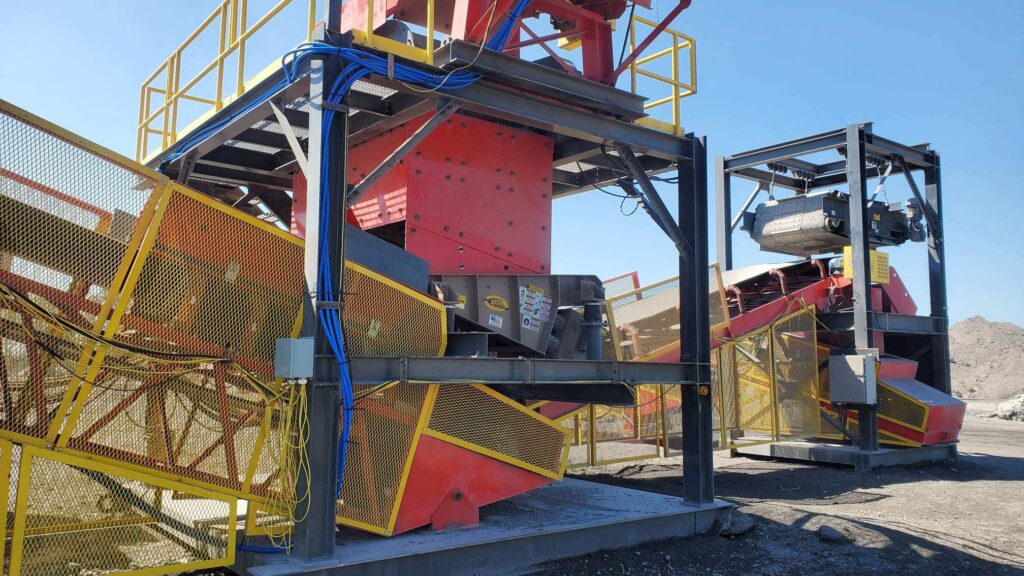
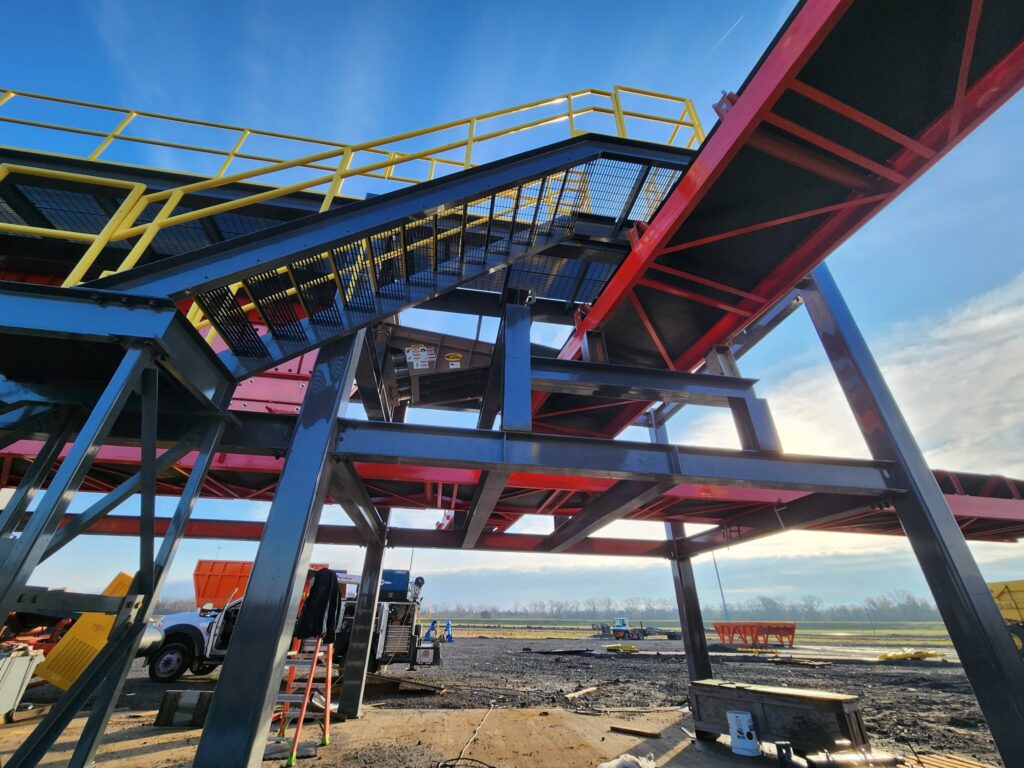
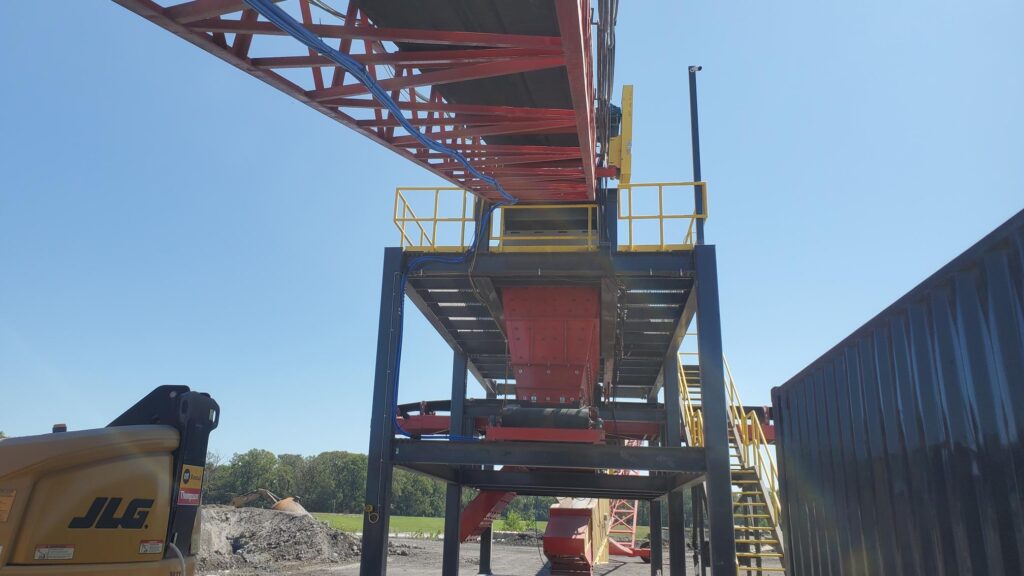
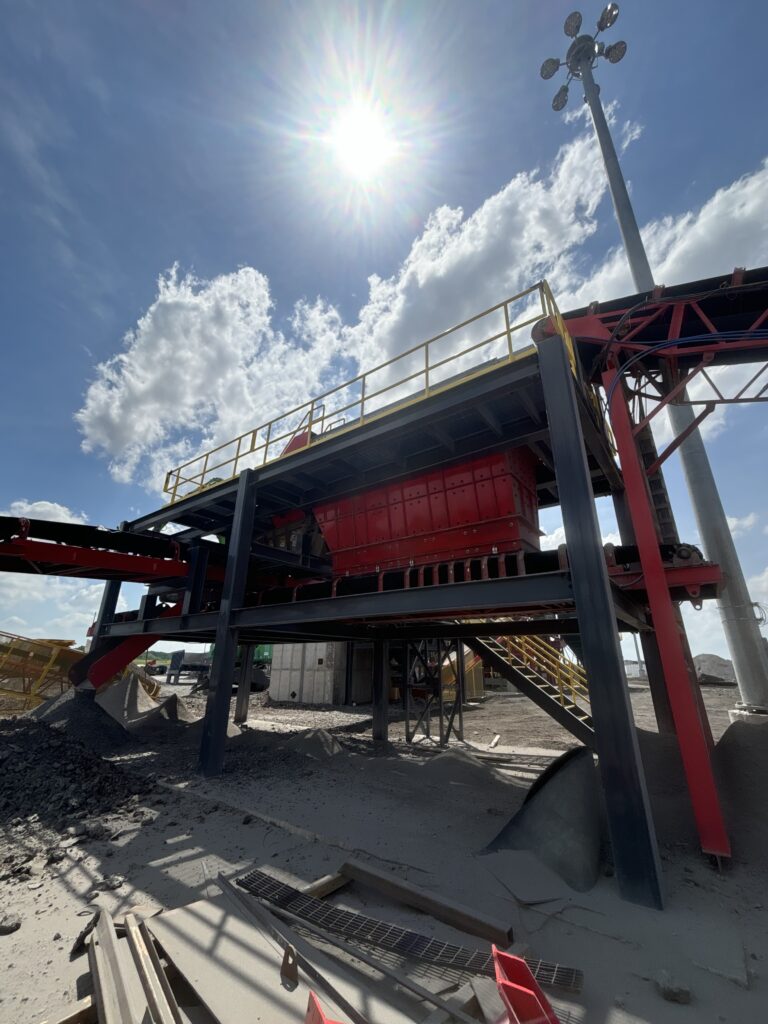
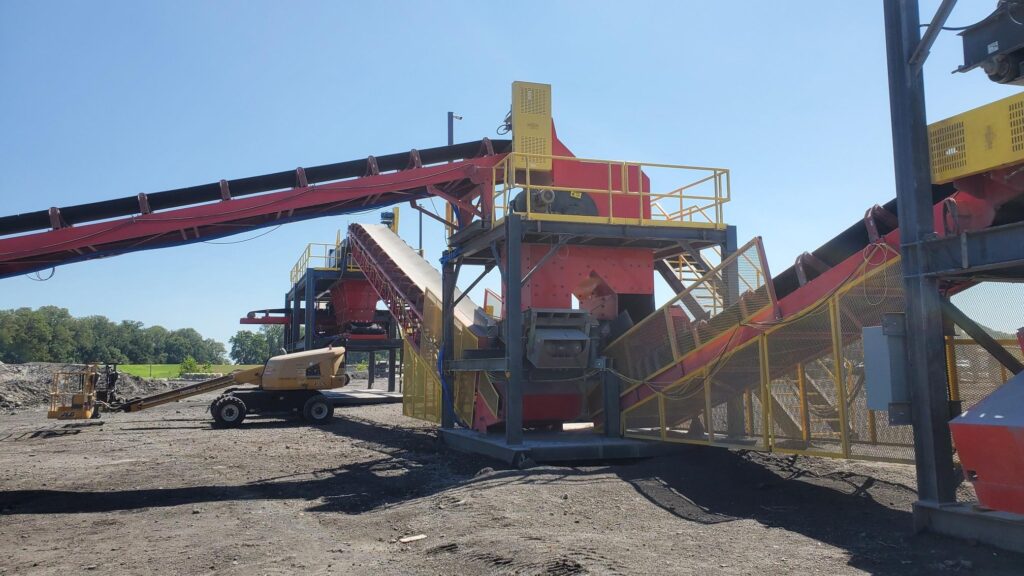
Following the primary feed conveyor, material enters a drum magnet separation system supported by a purpose-built structural frame.
This structure supports:
- The drum magnet
- Two Syntron F-480 feeders (slag and metallic streams)
- Fully wear-lined under-drum chutes
Chute construction includes:
- ¼” mild steel shell
- Bolt-in ½” AR liners on all vertical walls
- Bolt-in ½” Tricon liners on all angled surfaces
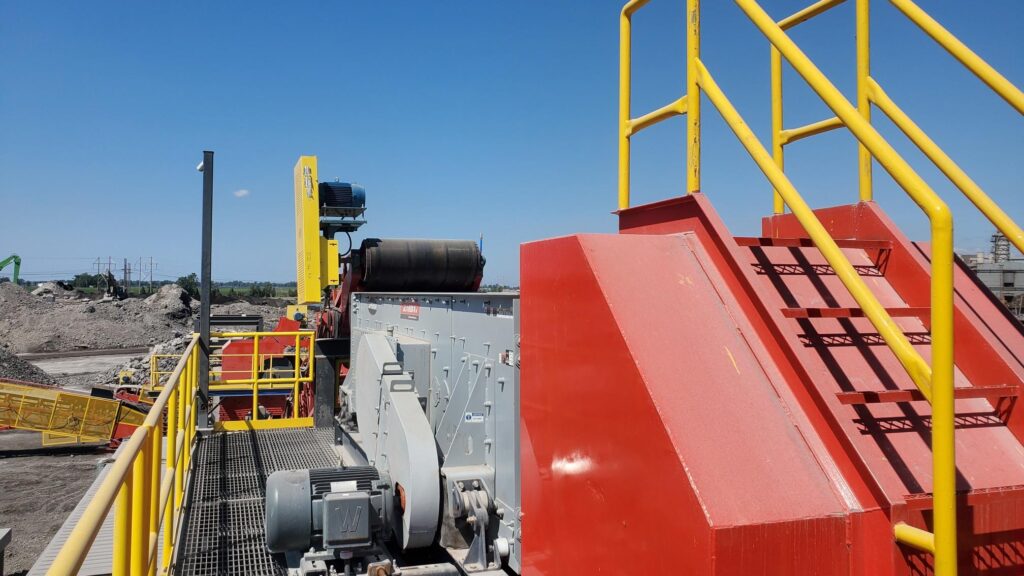
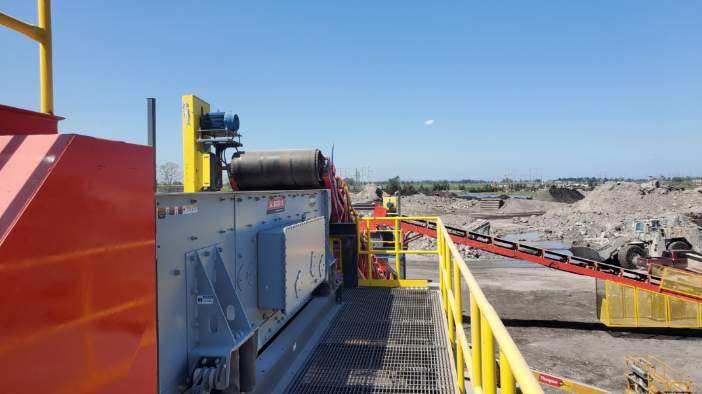
A 360-degree catwalk and stair system surrounds the drum magnet, providing safe access for inspection and maintenance without interrupting plant operations.
Slag and Ferrous Conveyor Systems
Separated material is routed to dedicated slag and ferrous conveyors, each fabricated to suit its specific duty cycle.
48″ x 50′ Slag Conveyor
- Channel-frame construction
- 20 HP Dodge TAII gearbox
- 18″ stainless steel head pulley
- Superior pulleys and idlers with upgraded seals
- 35-degree troughing
- Impact bed at loading zone
- 330 US Flex belting
48″ x 50′ Ferrous Conveyor
- Channel-frame construction
- 20 HP Dodge TAII gearbox
- Superior pulleys and idlers with upgraded seals
- 35-degree troughing
- Impact bed
- 330 US Flex belting
Each conveyor is designed to minimize spillage, reduce wear, and maintain consistent material flow.
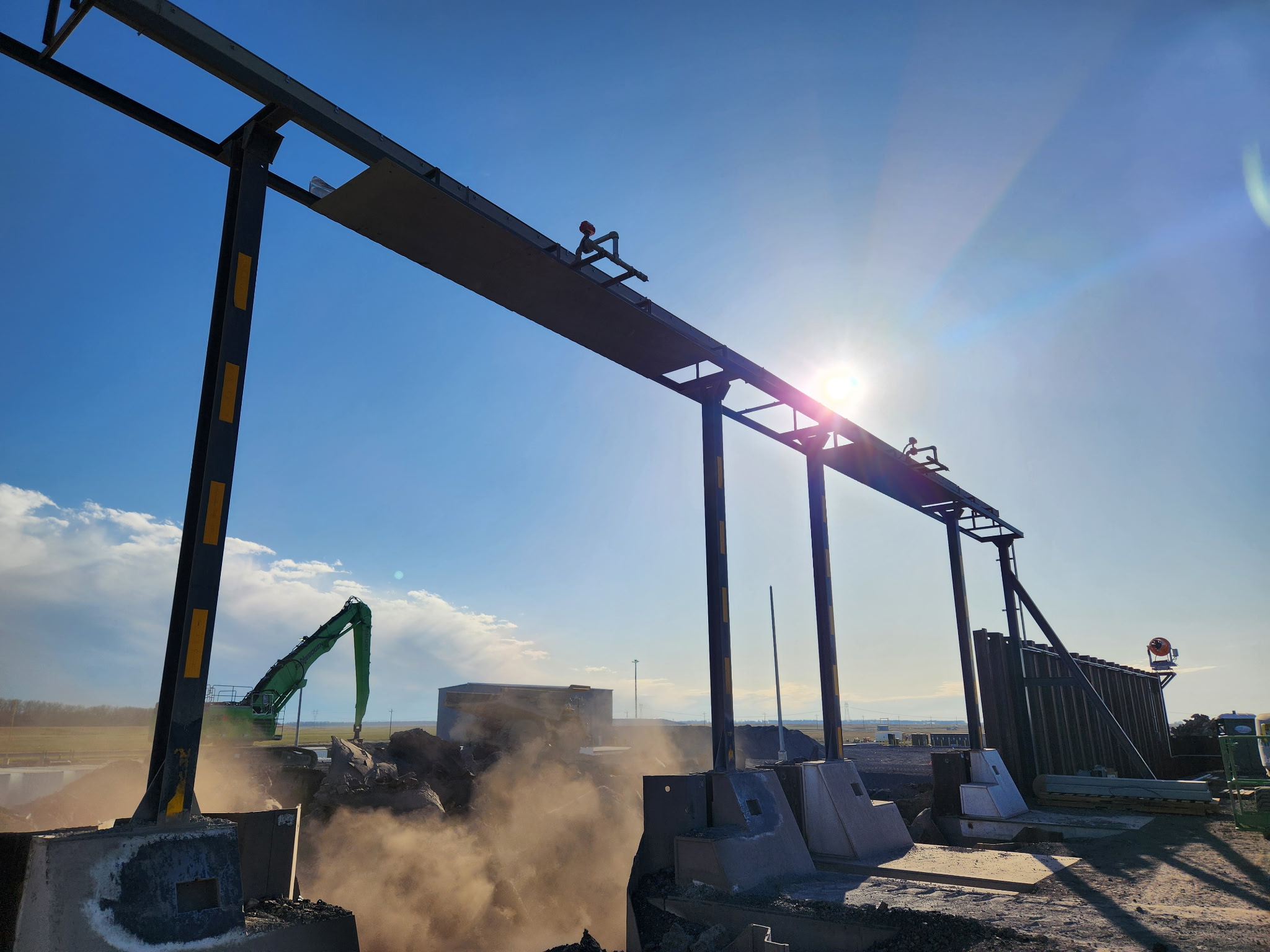
Over-Band Magnet and Metallic Recovery Systems
To further enhance material recovery, the debris plant includes inline over-band magnetic separation mounted on a dedicated skid frame.
This system typically includes:
- One inline over-band magnet
- One metallic chute
- One slag chute
- One metallic pile plate
Chutes are fabricated with:
- ¼” steel shell
- Bolt-in ½” AR liners on vertical walls
- Bolt-in ½” Tricon liners on angled surfaces
This configuration improves separation efficiency while protecting structural components from abrasive wear.

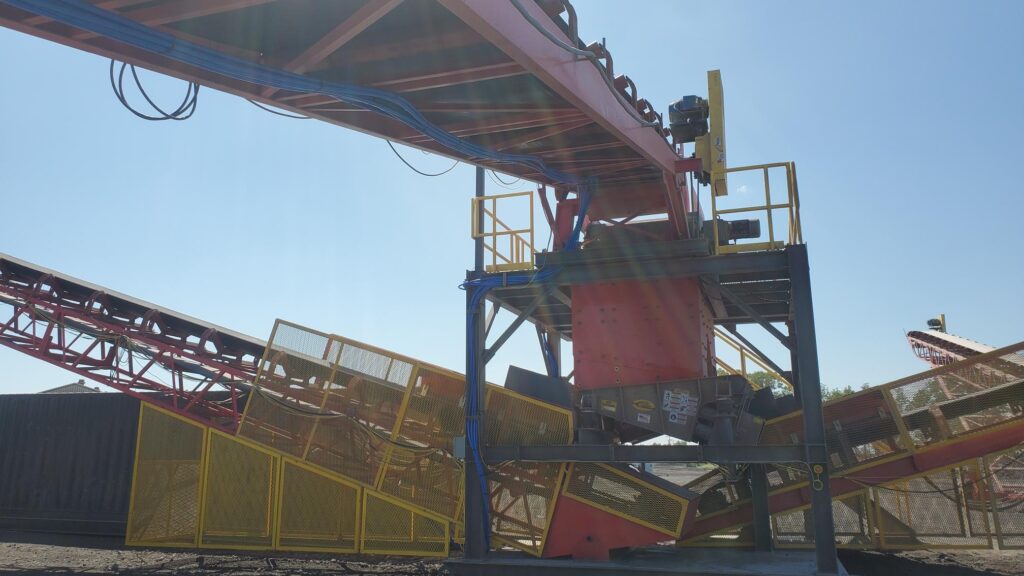
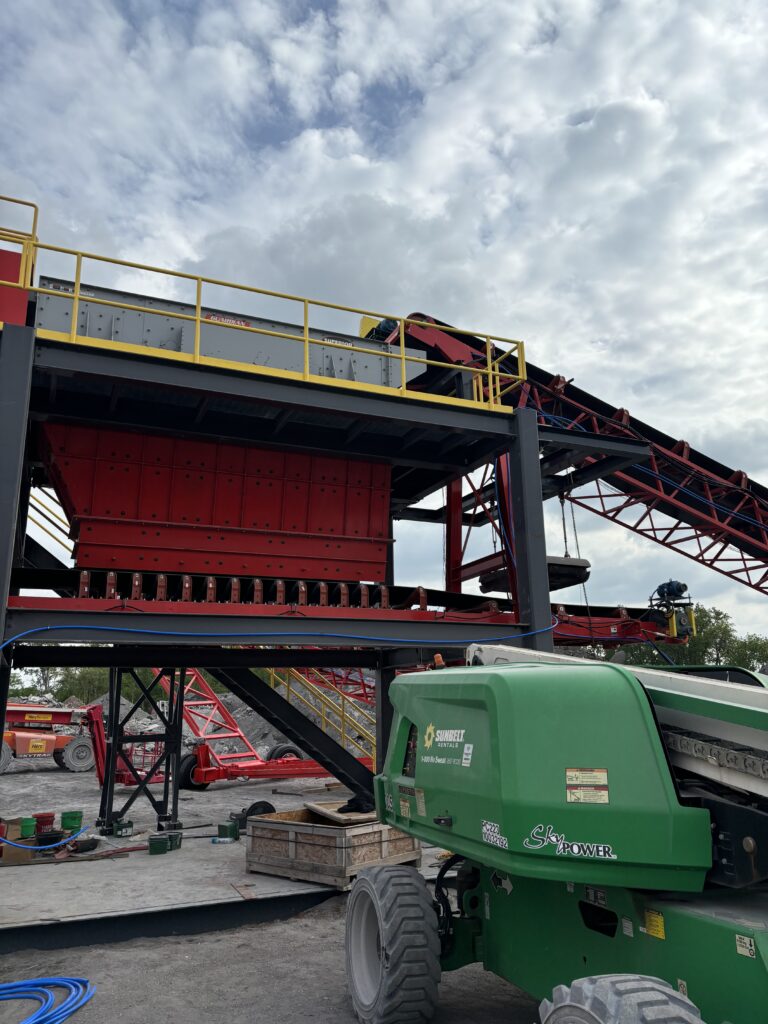
Screening and Classification Structure
Material classification is handled by a 5′ x 16′ horizontal screen, supported by a custom-fabricated structural steel frame.
Features include:
- Under-screen chute with AR and Tricon liners
- Overs roll-off chute above the catwalk
- Overs discharge chute below the catwalk
- Full 360-degree catwalk and stair access
The screen structure is designed to safely support dynamic loads while providing maintenance access to all wear components.
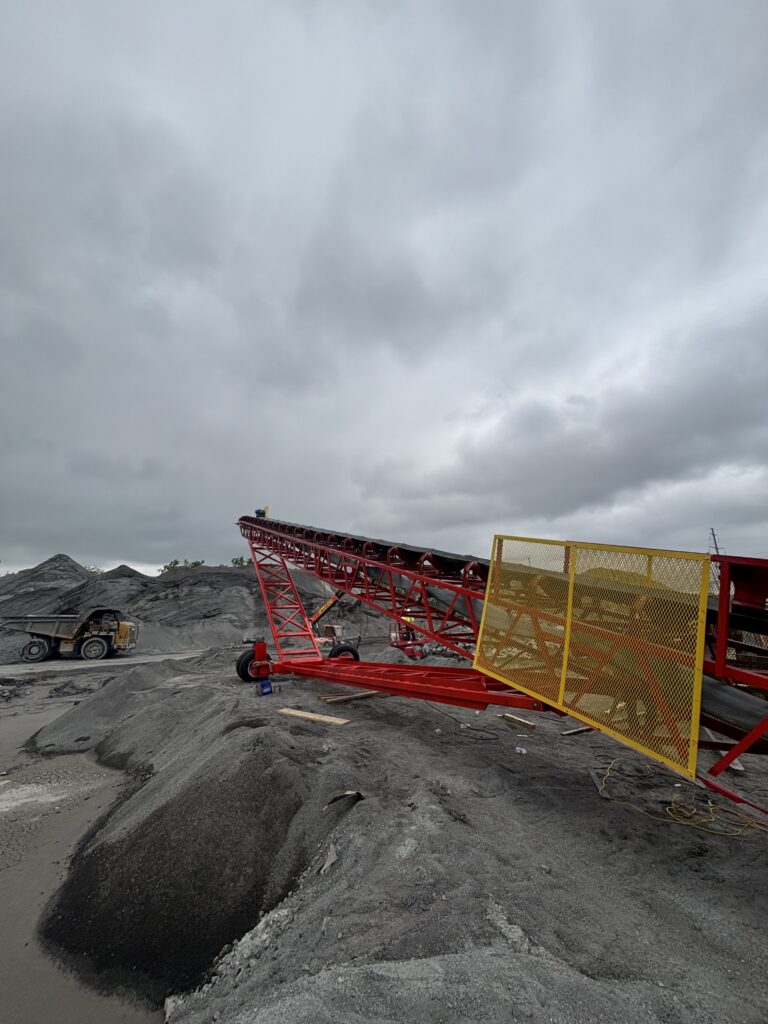
Radial Stackers and Stockpiling
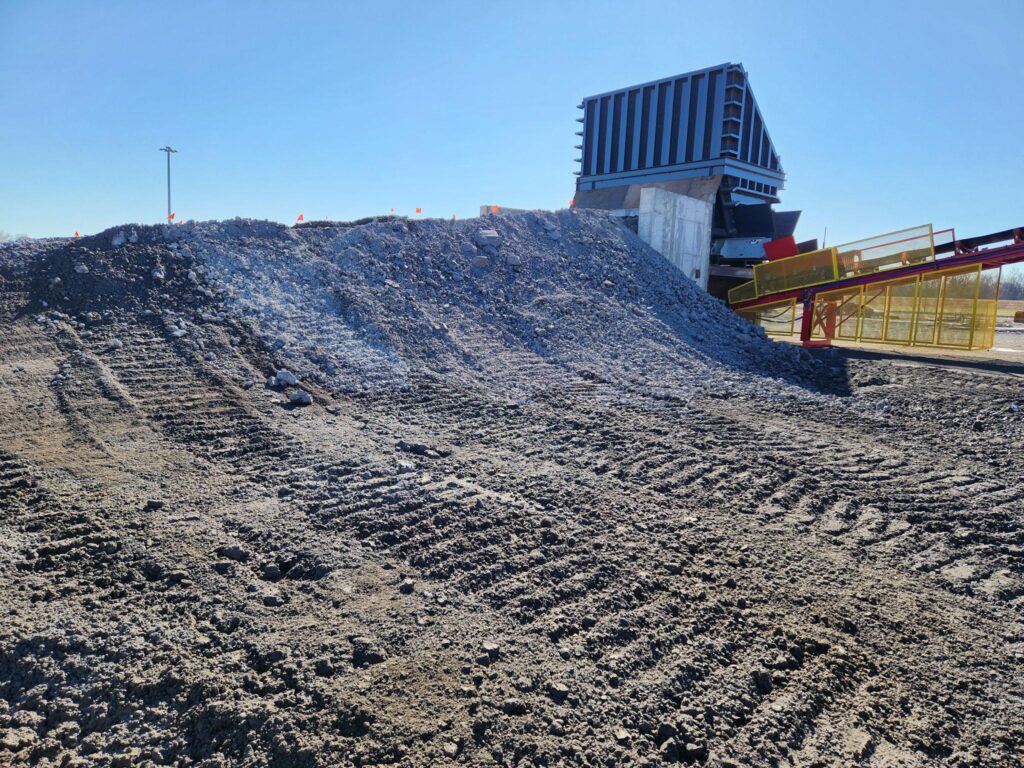
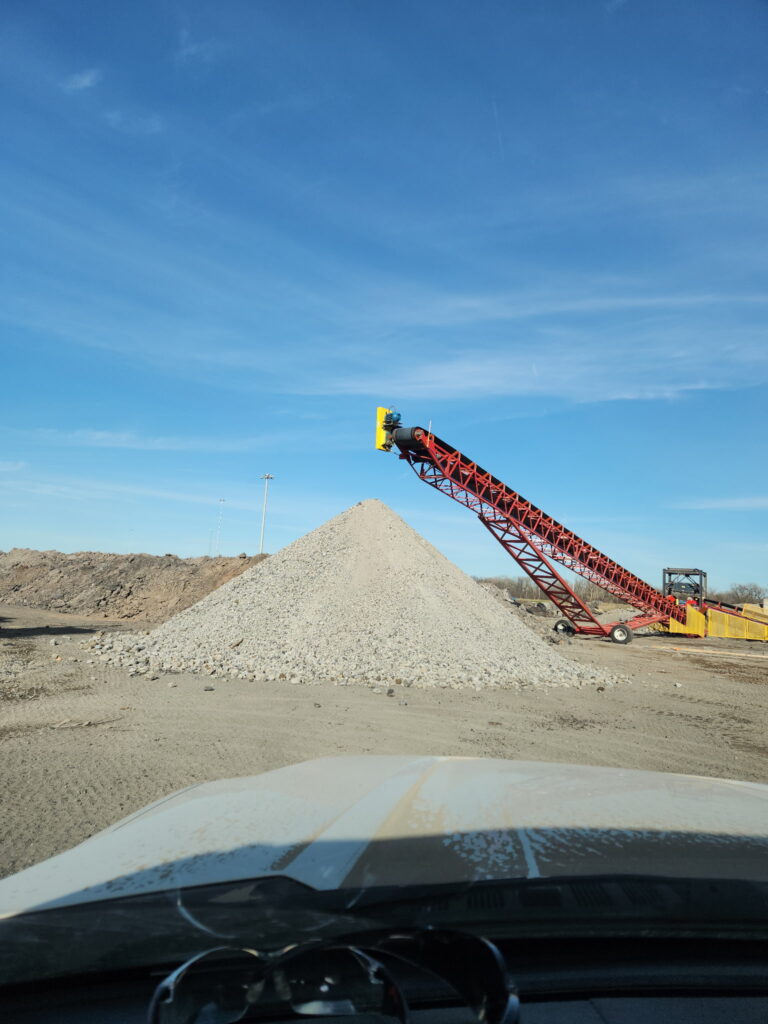
Processed material is conveyed to stockpiles using 36″ x 100′ radial stackers, providing flexibility in pile management and site layout.
Typical stacker features include:
- 25 HP Dodge TAII drive packages
- Superior pulleys and idlers with upgraded seals
- 35-degree troughing
- Impact troughers at feed point
- Power radial drive
- Manual lift/lower system
- Integrated belt scales for production tracking
Radial stackers allow operators to build uniform stockpiles while maximizing usable yard space.
Controls, Automation, and Data Systems
Each debris plant is supported by a PLC-based controls system with touchscreen HMI operation. The control package integrates all major motors, conveyors, feeders, and sensors into a unified automation platform.
Key elements include:
- VFD-controlled motors
- Belt speed switches on all conveyors
- Integration with Syntron feeders and weigh belts
- Fault monitoring and run verification
- Operator touchscreen interface rated for industrial environments
Optional cloud-based data services allow plant owners to monitor:
- Tons produced
- Motor amp trends
- Fault history
- Sensor and component performance
This data-driven approach supports predictive maintenance and long-term operational optimization.
Control Room Connex and Supporting Systems
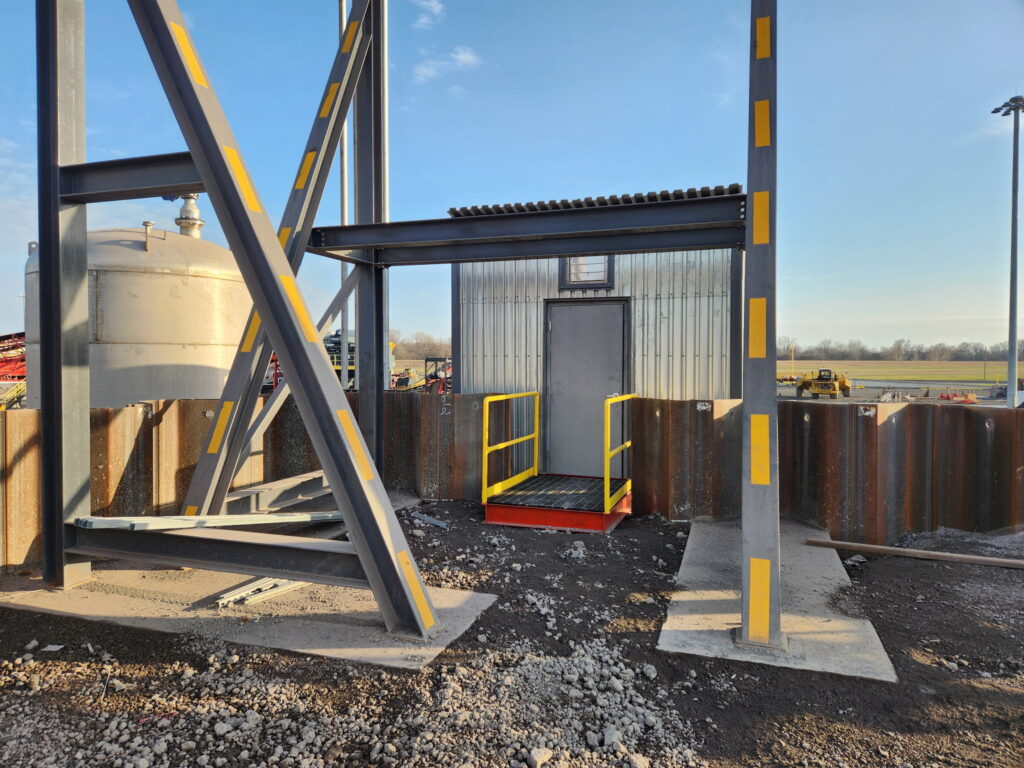
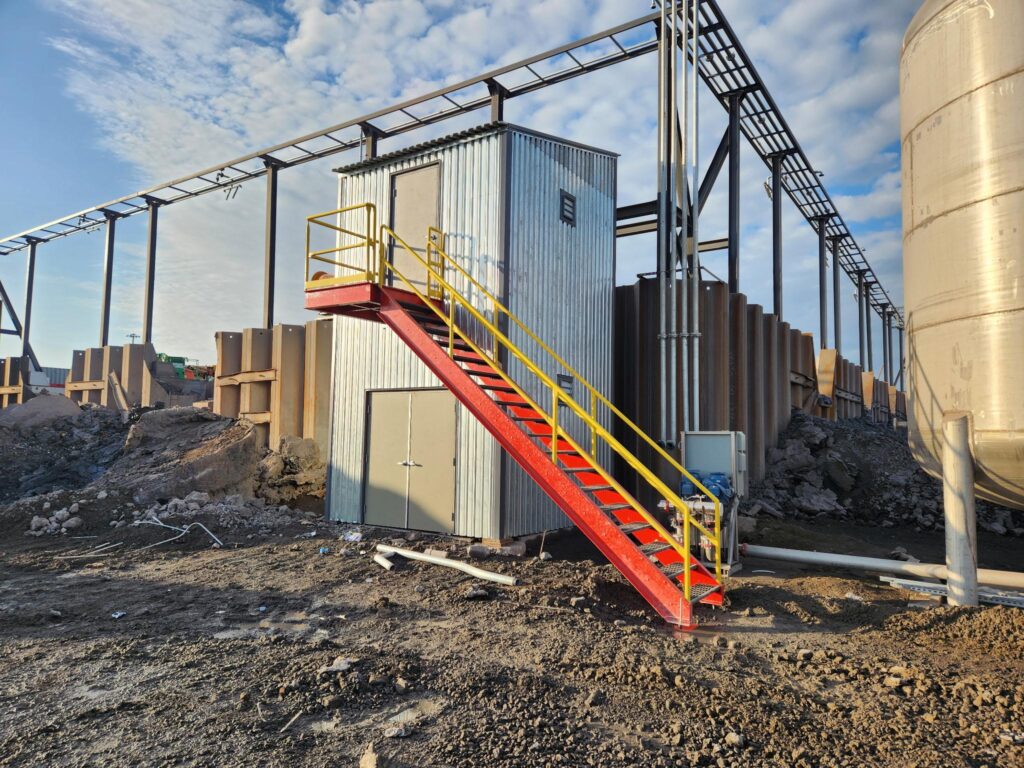
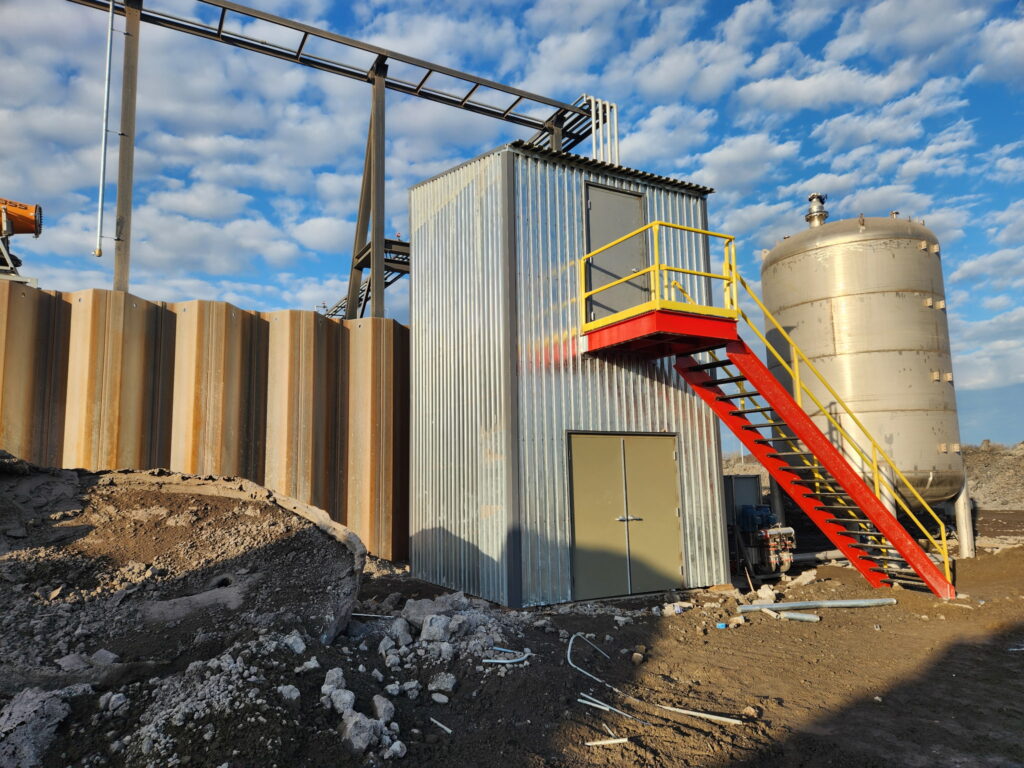
For on-site operations, a modified 40′ Connex control room is provided, featuring:
- Divided controls room and parts room
- Insulation, interior board, and paint
- Mini-split HVAC system
- LED lighting
- Man doors with stair access
- Control room counters and viewing windows
- Exterior paint matched to plant color scheme
Additional systems include:
- Camera systems for operational visibility
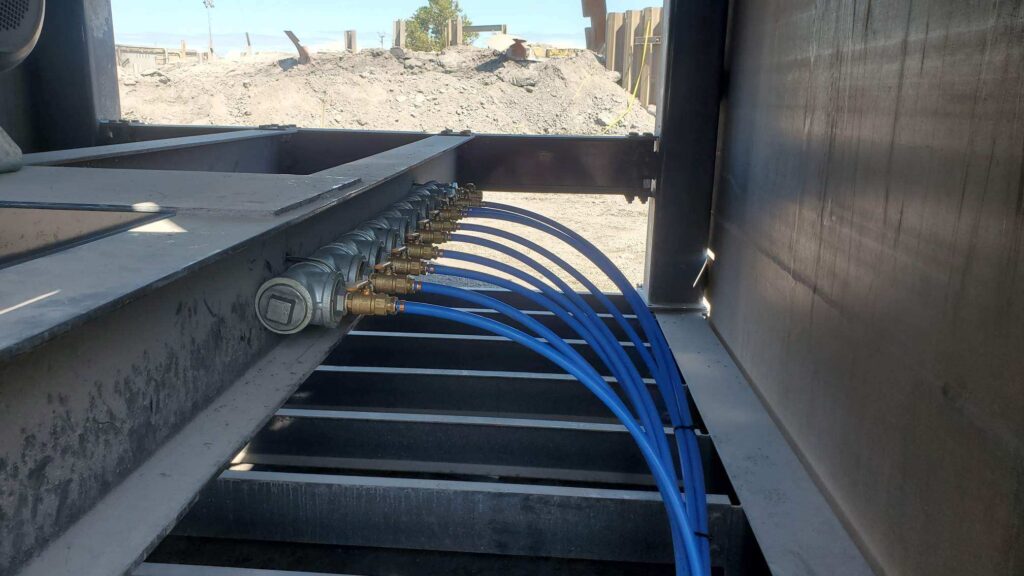
- Dust suppression water piping with spray nozzles at key transfer points

Complete Mechanical and Electrical Installation
Xtreme Services provides full mechanical and electrical installation, including:
- Cranes, telehandlers, manlifts, and tooling
- Welders and field fabrication equipment
- Rapid site mobilization
- Startup and debug support
Installation is typically performed on extended schedules, including 12-hour days, to minimize downtime and accelerate commissioning.
A Proven, Cutting-Edge Debris Processing Platform
These debris plant systems represent a modern approach to material separation, combining heavy-duty fabrication, advanced magnetic technology, and integrated controls into a single turnkey solution.
By engineering the plant as a complete system — rather than a collection of individual components — Xtreme Services delivers debris plants that are safer, more efficient, and built for long-term performance in demanding industrial environments.